
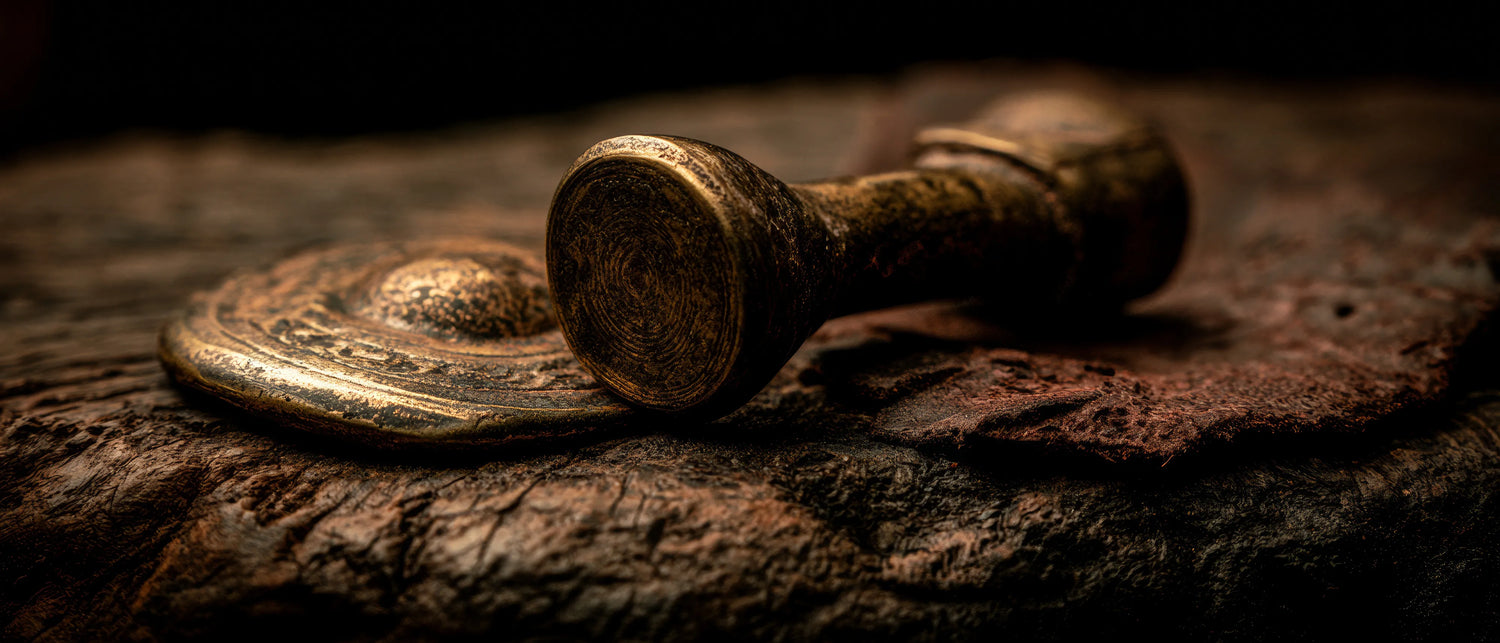
THE HEPTARCHY
Defining the ancient foundations upon which the Seven Kingdoms were forged.
The Sovereign Kingship
The Prologue: The Seven-Fold Soul of a Vanished World
Close your eyes. Forget the hum of the motorway, the blue light of the screen, and the relentless ticking of the modern clock. Breathe in. The air here is different—it is heavy with the scent of damp earth, woodsmoke, and the sharp, salt spray of an untamed sea. You are standing in the year 700 AD. The Roman paved roads are already being swallowed by the forest, their straight lines broken by the insistent roots of ancient oaks. This is a land of shadows, of mist-veiled fens, and of seven suns rising over seven different thrones.
This is the Heptarchy.
This was not a country of borders drawn on paper; it was a land of blood, of iron, and of the rhythmic thud of hooves on soft turf. To live in this age was to live in a movie of grand, sweeping scales. In the age of the Heptarchy, the horse was not a luxury; it was the engine of state. A high-status saddle was a throne in motion. It was crafted from the finest hides, stitched with the patience of a saint, and designed to carry the weight of an Ealdorman's authority across hundreds of miles of unmapped territory. When a rider crested a hill on the borders of Wessex, the creak of his leather and the jingle of his harness announced his status long before his banner came into view.
This collection, The Heptarchy, is our attempt to capture that cinematic grandeur. We did not design these bags for the fleeting trends of a season; we designed them for the High Houses. These models are the "Great Houses" of Caracoda Equestrian. They possess a structural dominance—an architectural weight that demands you stand a little straighter when you carry them. Every bag in this collection is named after a specific shire or sub-kingdom, carrying with it the DNA of the landscape that inspired it.
When you touch the leather of a Heptarchy bag, you are touching the same resilience that allowed these seven kingdoms to forge a nation from the ruins of an empire. You are choosing to walk through the world with the gravity of a King's progress, carrying a piece of history that has been resurrected, restored, and refined for the modern age, but whose soul remains firmly planted in the 7th-century soil. It is the core of the Caracoda Equestrian lineage—the original seven seeds of a nation, resurrected in leather that has already proven its endurance through decades of its own history.
Step forward. The Hall is lit, the fire is roaring, and the Seven Kingdoms are waiting for their next custodian.
The Hardware of the Kingdoms
In the world of Caracoda Equestrian, even the metal carries a message. For the houses of Wessex, Northumbria, East Anglia, Kent, Essex, and Sussex, we use solid brass to reflect the warmth of the southern chalk, the regal light of the northern monasteries, the golden hoard of the eastern kings, the sacred coins of the Kentish sun, the bolted gates of the East Saxon capital, and the shield-fittings of the south coast sentinels. But for Mercia, we use only the "White Metal" of stainless steel—a tribute to the iron-masters of the heartlands and the silver pennies of King Offa. Each piece is chosen not just for its strength, but for its place in the story of the land.
I. The House of Wessex: The Uffington
The Model: The Molded Vertical Horseshoe (The Scrip)
The Spirit: The Stoic Shield / The Ancient Pouch
The Mentality: Pragmatic, resilient, and enduring; the "Long-Players" and keepers of the deep chalk lands.
- The Ancestry of the Scrip: To understand the Uffington, one must first understand its ancestor: the Scrip. Derived from the Latin scrippum, the scrip was the survival kit of the ancient world—a small, sturdy pouch slung over the shoulder of the pilgrim, the shepherd, and the scout. It was a vessel of necessity, holding the flint, steel, and silver required for the long road. By naming the Uffington a Molded Scrip, we are reclaiming this word from the ledgers and returning it to the rider's hip. It is not an accessory; it is a piece of high-status equipment for the journey of life.
- The Giant in the Chalk: Looking not at the map, but at the earth itself, high upon the wind-swept Berkshires, a great white dragon-horse is carved into the hillside, its body made of the very chalk that forms the bones of England. The Uffington is named after this prehistoric guardian because it shares its most vital trait: Endurance. We chose the horseshoe shape for this model because it is the ultimate symbol of protection—the shield that allows the horse to run a thousand miles without breaking.
- The Artisan's Rare Harvest: This model is a rare occurrence in our workshop, born from a single, unbroken expanse of a vintage saddle flap. We seek out these substantial pieces of leather to create a vertical horseshoe silhouette, taller than it is wide, echoing the traditional sporran-like profile of a traveler's scrip. To ensure this legacy never warps, the leather is wet-molded over high-density, non-distorting synthetic forms into a permanent, architectural shield.
II. The House of Mercia: The Tamworth
The Model: The Landscape Daily Satchel (The Anvil) / The Square Box Tote
The Spirit: The Powerhouse of Iron / The Solid Foundation
The Mentality: Aggressive, dominant, and industrious; the "Middle Kingdom" and the anvil of the English spirit.
- The Heart of the Anvil: If you were to stand in the center of the 8th Century, you would find yourself in Mercia, the kingdom of the "Middle People" and the powerhouse of trade. This was the land of King Offa, the anvil upon which the idea of England was first hammered out. We named this model The Tamworth after the royal seat of the Mercian kings, where the air smelled of woodsmoke, hot iron, and ambition.
- The Architecture of Power: While the silver pennies Offa struck were famously round, the heavy iron tools that forged them were broad, square-set, and unyielding. The Tamworth is the "Brother" to the Uffington—the Anvil to the Shield. To build a Tamworth, we seek out the most rigid sections of the saddle's Top Flaps and Sweat Flaps, cured by the salt of the horse and the pressure of the rider's weight into a material that is almost like wood in its density.
- The Iron-Clad Reinforcements: The model features a powerful landscape architecture and a straight-edge flap anchored by dual vertical straps spaced wide apart. This prevents the leather from warping under a heavy load and doubles the "Iron" presence of the hardware, standing visually like the fortified gates of a Mercian Burh. To honor the Mercian obsession with metalwork, we use cold, unyielding solid stainless steel—a bag of "Brutal Beauty" designed for commerce and authority.
III. The House of Northumbria: The Bamburgh
The Model: The Arched Codex (Tall Portrait)
The Spirit: The Scholar-Warrior
The Mentality: Dualistic; a kingdom where a man might lead a cavalry charge at dawn and debate a Latin manuscript by dusk.
- The Light of the North: To find the soul of Northumbria, you must travel to the edge of the world—to the basalt throne of Bamburgh Castle. This was a realm of "Cold Beauty" where warriors held the shield-wall at dawn and painted the gold-leafed pages of the Lindisfarne Gospels by candlelight. We named this model The Bamburgh because it represents that duality—it is a fortress for your belongings, but it carries the grace of a holy relic.
- The Arched Codex: Its tall, portrait-oriented shape mimics the silhouette of a medieval manuscript or a traveling scholar's book-case. The defining feature is the deep, arched flap—an inverted "U" that sheds the northern rain like the roof of a cathedral. It is the bag of the traveler who carries ideas as well as tools.
- The Seal of the High Priest: For this model, we select the "Heart of the Seat" leather, polished by years of movement into a surface that feels like old vellum. The final touch is a single, central, solid brass harness buckle. It acts as a seal, mimicking the binding of a sacred book and signaling that the contents within are valuable, protected, and private.
IV. The House of East Anglia: The Wuffing
The Model: The Royal Vault (The Trapezoid)
The Spirit: The Wolf-Kin / The Hidden Hoard
The Mentality: Insular, mysterious, and maritime; the keepers of the deep mysteries who lived in the half-light of the Fens.
- The Dynasty of the Wolf-Kings: To look East is to look into the shifting, mysterious marshes where the earth dissolves into the vast horizons of the fens. We named this model The Wuffing to honor the dynasty of warrior-mystics who kept one hand on the sword and the other on the golden artifacts of their ancestors.
- The Legend of the Bretwalda: Raedwald, the first East Anglian to be named Bretwalda (High King), walked between two worlds, famously keeping two altars in his hall. When he died, he was likely the king laid to rest in the 27-meter long oak ship at Sutton Hoo, surrounded by Byzantine silver, Frankish gold, and that iconic iron helmet. To carry a Wuffing is to carry the legacy of a man who mastered both traditions.
- The Architecture of the Vault: We chose a structured trapezoid silhouette—wide and grounded at the base, tapering elegantly toward the top—to represent the monumental slope of a burial mound and the architectural weight of a treasure chest. It is a shape of "Grounded Authority" that anchors itself to the ground. For this model, we seek out hides that have aged into a rich, dark patina, finished with the regal glow of solid brass echoing the garnet-encrusted gold found buried in the eastern sands.
V. The House of Kent: The Reculver
The Model: The Circular Sun (The Sacred Coin)
The Spirit: The Roman Light / The Sacred Authority
The Mentality: Refined, cosmopolitan, and wealthy; the "Front Door" to Europe and diplomacy.
- The Gateway to the Sun: Kent was the first of the Seven Kingdoms to wake, the portal through which Roman stone, Frankish silk, and the bells of a new faith entered the island. We named this model The Reculver after the imposing Roman towers that still stand as a beacon on the coast, signaling the entry into the most refined of the High Houses.
- The Architecture of the Circle: In the Heptarchy, Kentish gold sceattas were the most exquisite coins in the world—perfect, rounded symbols of wealth and international status. We depart from the sharp lines of fortresses and vaults for this model; the Reculver is defined by its Circular Silhouette, representing the "Sacred Coin" and the rounded Roman arches.
- The Spirit of Refinement: It is the most technically demanding piece in the collection, mirroring the precision of a royal Kentish hoard. We select the most polished, smooth sections of the saddle seat for The Reculver, creating a surface that reflects the light like a burnished sun-disc. Finished with a central brass closure that acts as the "Seal of Authority," it is the bridge between the rugged Saxon earth and the refined traditions of the Continent.
VI. The House of Essex: The Colchester
The Model: The Landscape Bastion (The Chamfered Rectangle)
The Spirit: The Ancient Sentry / The Iron Coast
The Mentality: Urban, defensive, and strategic; sentinels focused on the protection of the trade gates.
- The First City of the East: To enter Essex is to walk upon the very foundations of the Roman world. This was the land of Britain's first capital, a place where the East Saxons built their halls amidst the enduring stone ruins of an empire. We named this model The Colchester after Britain's oldest recorded city—a place of monumental walls and hidden coastal creeks.
- The Architecture of the Bastion: The gear of the East Saxon was built for the "Long Watch"—it is landscape-oriented, wide, and stable. The Colchester is defined by its Landscape Silhouette—longer than it is tall—echoing the sweeping lines of the Roman walls. We use Chamfered Corners, clipping the sharp angles of the rectangle at 45 degrees to create a faceted, industrial look reminiscent of a coastal bastion or a heavy iron merchant's chest.
- The Reliable Guardian: This model provides the largest internal volume in the collection, designed to accommodate the "ledger" of modern life while remaining perfectly balanced against the hip. We select the most resilient, heavy-grain sections of the saddle flaps to ensure it possesses the endurance of stone walls, finished with robust brass hardware that mimics the structural bolts of a city gate.
VII. The House of Sussex: The Arundel
The Model: The Tapered Scrip (The Moulded Portrait)
The Spirit: The Noble Sentinel / The Rolling Down
The Mentality: Rugged, wild, and isolated; the hunters and timber-harvesters locked between the sea and the forest of the Andredsweald.
- The Realm of the South Saxons: To reach Sussex is to find a kingdom forged between the steep chalk downs and the deep, silent woods of the Weald. This was a land of quiet resilience, isolated by its geography and fiercely independent. We named this model The Arundel after the towering seat of the Southern Earls—a place of unyielding stone and timeless English nobility.
- The Imagery of the High Downland: Picture a solitary rider cresting the South Downs at sunset. The gear here is refined, slim, and elegant—designed for a kingdom that values the "Quiet Sovereign". The bags are vertical, mirroring the Roman columns found in the valley villas, but softened by the curves of the landscape.
- The Architecture of the Tapered Scrip: This is a Tapered Portrait silhouette, wider at the base and narrowing elegantly toward the top. The soft, rounded corners at the base echo the gentle slopes of the Downs, balancing vertical strength with natural fluidity. The defining feature is the Molded Plateau—a raised field in the center of the leather that creates a three-dimensional shield. The model is defined by its vertical harness strap and solid brass Sam Browne closure, providing a tactile connection to the horse and a silent reminder of the miles traveled.
The Artisan's Final Note on the Heptarchy
Every bag in this collection carries a fragment of a former life within its fibers. You might find the faint impression of a harness buckle, a "ghost stitch" from a hunter's horse, or a slight variation in the grain where the leather was once pressed against a rider's leg. At Caracoda Equestrian, we do not hide these marks. They are the scars of the shield, the texture of the anvil, and the footnotes of history. You are not merely a customer; you are the next custodian of a thousand-year-old story.