
Leather Care
Traditional provisions and protocols for the life of the hide
The Life of the Leather: A Care & Preservation Guide
The heavy labour of the saddler—the slow currying of the thick tallows, the rhythmic pulling of the waxed linen thread, and the tireless burnishing of the raw edges—is finally complete at our bench. The future and care of the hide now pass directly to you. Every Caracoda Equestrian piece is constructed from vintage saddle leather that has already lived a robust and storied life long before arriving at our workshop. We have invested immense time and specialised restoration techniques into reviving these antique fibres, and when you bring one of our bags home, you are entering into a quiet, deeply rewarding partnership with the material itself.
We want every customer to understand that vintage, oak-tanned leather is not a static, modern synthetic manufactured in a factory; it is a living, breathing fabric of the natural world. Our goal is never to make your bag look factory-new, but rather to keep the fibres wonderfully supple so the leather can continue to age with grace. It will react to the damp salt air of the coast, the freezing, biting winds of the shires, and the relentless heat of the summer sun. Because it is alive, it requires a relationship with its owner. This guide has been written to walk you through the simple, highly effective everyday routines needed to ensure your bag endures for decades to come.
When your new bag first arrives and you lift it from its box, it may feel resolute, heavy, and structurally unyielding in your hands. Do not be alarmed by this initial stiffness; it is the true, defining hallmark of traditional English saddlery and a testament to the sheer density of the oak-bark tanning process. You might feel a temptation to forcefully break the leather, to crush the side gussets, or to aggressively bend and twist the heavy shoulder straps to make them softer. We strongly advise against this. Artificial breaking damages the internal collagen matrix before it has a chance to adapt to you.
Instead, simply begin using the bag in your daily life. Allow the natural warmth of your body, the weight of your belongings, and the gentle daily friction of travel to slowly and organically awaken the dormant fibres. Over the course of the first few weeks and months, the heavy oak-tanned grain will naturally yield. It will soften precisely at the stress points where it needs to flex, while maintaining its rugged structural integrity everywhere else. The leather will quite literally memorise the exact way you carry it, the swing of your stride, and the shape of your hip. It will become uniquely and undeniably yours simply through the patient act of wearing it. Along the way, your bag will naturally darken, soften, and develop a deeply personal patina. It will inevitably pick up new scratches, scuffs, and indentations from your daily travels. Please remember that these are not flaws; they are the very character of the hide recording your shared history. Do not attempt to aggressively rub them away.
In terms of everyday care, many customers are surprised to learn that the most destructive force to traditional saddlery is actually not rainwater, but ordinary dust. After a long afternoon walk through dry, summer fields or a busy daily commute through city streets, microscopic, abrasive particles will quietly settle into the natural creases and seams of the hide. If left unattended over the months, this settled dust acts exactly like invisible, microscopic sandpaper. Every single time the leather flexes, bends, or moves, that grit slowly wears down the internal fibres, fraying the stitching and dulling the beautiful patina you have worked so hard to build.
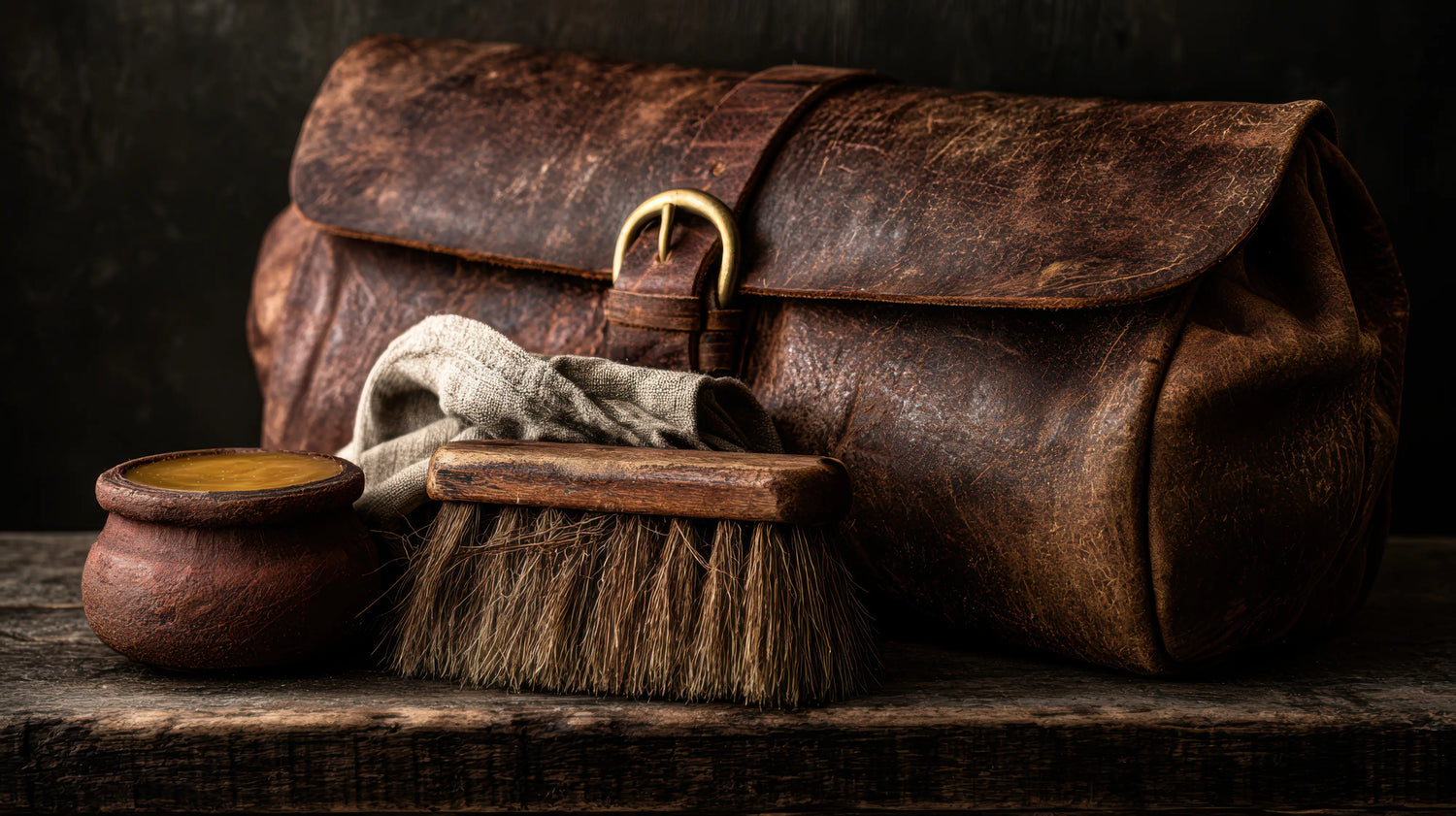
Preventing this hidden damage is entirely straightforward and takes only a few moments. Keep a dedicated, soft horsehair brush near the hallway hook or the shelf where you normally hang your bag. After a heavy day of use, or at the very least once a week, give the entire surface of the leather a quick, methodical sweep. Pay very special attention to the heavy two-needle seams, the deep folds of the gussets, and the hidden areas resting beneath the solid brass buckles. This simple, satisfying daily clearing will do far more to preserve the lifespan of your bag than almost any other maintenance routine. While you are brushing the leather, take a quick moment to run your fingers over the solid brass hardware to ensure the rivets and fittings remain tight and secure after heavy use.
When you are resting at home and not actively using your structured pieces, thoughtful storage is essential. We recommend storing your bag upright or hanging it naturally by the strap. Always ensure you store your bag in a highly breathable cotton or linen dust cover, and absolutely never in a sealed plastic bag or airtight box, which traps ambient moisture.
As the seasons turn and the bag is exposed to the elements, the hide will naturally expend its internal currier's oils. You do not need to adhere to a strict calendar to know when to condition your piece; the leather will visually and physically tell you when it is thirsty. You will know it is time for a seasonal feed when the main flap begins to feel slightly rigid and dry in your hands, when the leather gives off a faint creaking sound as it bends, or when its rich, deep lustre starts to look a bit hollow and matte.
When these signs appear, take a generous measure of The Common Wayfarer’s Balm (you can find the exact recipe for this over on The Apothecary page). You do not need a sponge or a cloth for this application; your bare hands are the absolute best tools for the job. Using the natural warmth of your fingertips, massage the salve deeply into the hide in small, overlapping, circular motions. The natural heat radiating from your skin will gently melt the beeswax and encourage the heavy, nourishing oils to dive straight into the open pores. Pay particularly close attention to the edges, the bending point of the main flap, and the heavy attachment points of the shoulder strap, as these areas work the hardest and lose moisture the fastest. Once you have worked the balm entirely into the grain, let the bag rest undisturbed overnight in a temperate room to drink it all in. The next morning, take a clean, dry cotton cloth or your horsehair brush and briskly buff the entire surface. This friction will sweep away any resting wax and awaken a beautiful, soft, weather-resistant gleam.
If you ever find yourself far from home and need to select a commercial, store-bought leather provision rather than mixing your own at the bench, you must be highly selective. Historic leather fibres are delicate and easily degraded by harsh modern chemicals. Seek out traditional, heavy-duty leather balms formulated entirely from natural ingredients like pure neatsfoot oil, sweet almond oil, natural beeswax, and rich botanical butters. You must strictly avoid any synthetic silicone sprays, petroleum-based products, or liquid chemical cleaners. Furthermore, absolutely avoid traditional, commercially produced "saddle soaps" that contain harsh lyes, as these will aggressively strip the natural oils we have painstakingly restored to your bag.
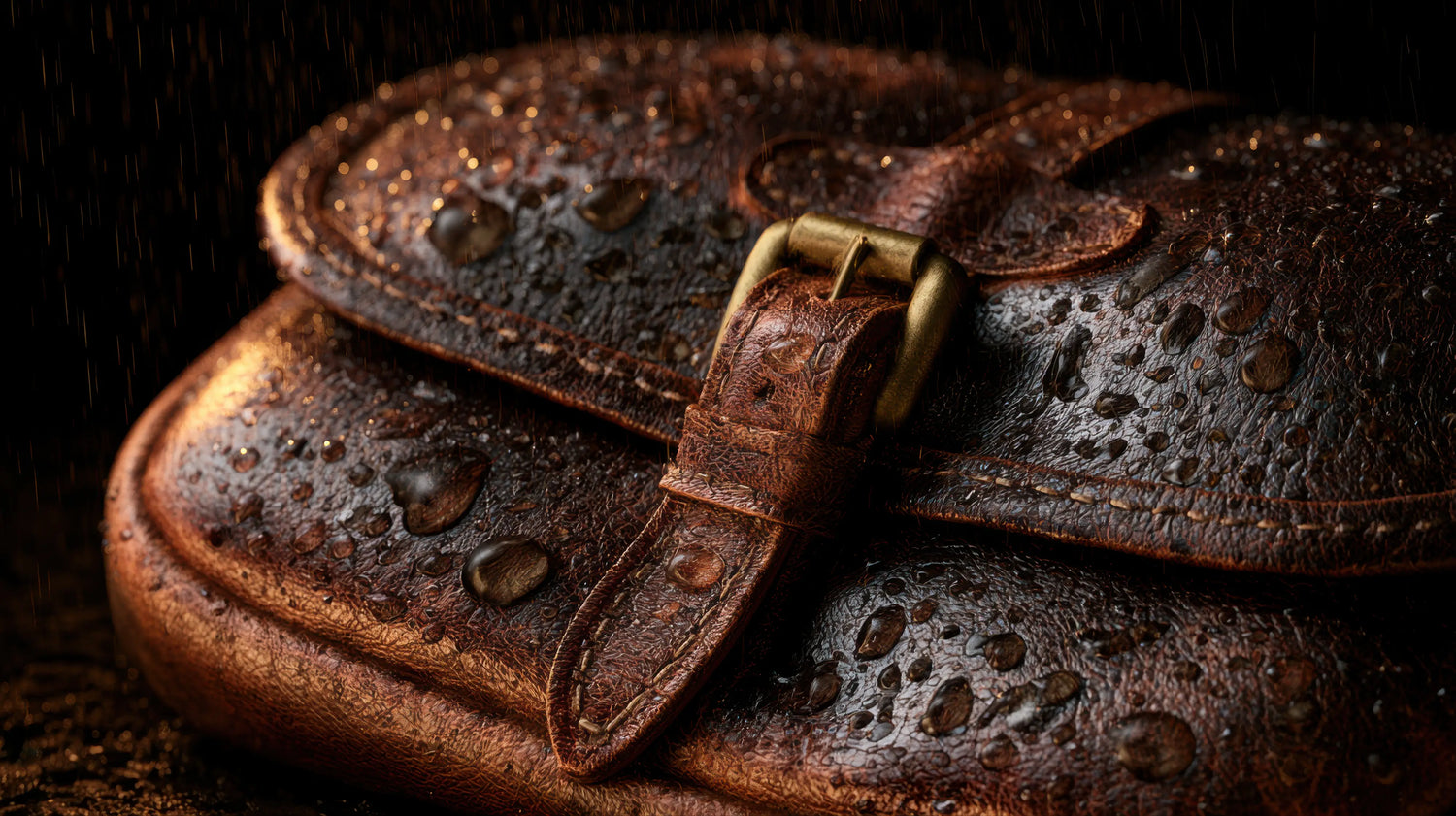
Living with an English saddle bag means that, eventually, you will be caught in a relentless, torrential downpour. If your bag gets soaked completely through to the inside, do not panic. Water itself is not the enemy of well-tanned leather. It is exactly how you handle the wet leather and the speed at which you attempt to dry it that determines its survival. Sometimes, a much lighter shower might just leave a few dark water marks or raindrop spots on the hide. If this happens, do not scrub the spots. Often, simply rubbing the dark spot gently with your warm, bare finger will redistribute the surrounding oils, and the mark will beautifully vanish back into the patina.
However, if the bag is drenched, the absolute golden, unbreakable rule of leather care is to never, under any circumstances, place wet leather near an open hearth, a roaring fire, a hot radiator, or a modern fan heater. Forced, artificial heating literally boils the moisture trapped inside the hide. As that water rapidly evaporates, it aggressively draws out all the essential neatsfoot oils and heavy tallows right along with it. This leaves the fibres completely hollow and causes irreversible, deep-seated cracking that no workshop balm or apothecary emulsion can ever heal.
To safely treat a heavily soaked bag, immediately empty it of all your personal belongings. Take clean, acid-free tissue paper or a series of dry, clean cotton cloths, and stuff the interior firmly. (Do not use old printed newspaper, as the wet leather will permanently absorb the ink). This crucial step ensures the bag holds its proper structural shape as it rests, and the paper will actively help draw the moisture out from the inside. If the stuffing becomes sodden after a few hours, replace it with a dry batch. Leave the piece resting in a cool, well-ventilated space—a draughty hallway or a shaded porch is absolutely perfect—and let it dry entirely at its own natural, unhurried pace. This gentle process may take several days depending on the thickness of the hide.
Once the fibres are finally bone-dry to the touch, the leather will likely feel quite stiff and look rather dull. It is incredibly thirsty and vulnerable at this stage, having had many of its surface fats washed away by the rain. You must immediately follow up the drying process with a thorough, heavy coating of The Common Wayfarer’s Balm (again, find the recipe in The Apothecary). Massage it deeply into the parched grain and the swollen seams to replace the lost nourishment, re-seal the surface, and restore its supple flexibility.
Extreme seasons also require a little forethought and active prevention. Before the first hard, biting frost of the winter sets in, the hide needs to be fortified against the drop in temperature. If the leather is parched and unprotected, the microscopic moisture remaining inside the bag can actually freeze. When you open the cold flap of the bag to retrieve your belongings, those tiny, frozen internal ice crystals act like microscopic blades, silently shattering the oak-tanned fibres from the inside out.
To prevent this winter damage, prepare a solid block of The Deep Winter Wax (the formulation for this block is available in The Apothecary). Because this specific recipe is a heavy, hard block rather than a soft, yielding paste, you apply it by rubbing the block directly and firmly against the surface of the leather, much like using a heavy bar of soap. The vigorous friction of your rubbing will melt the very top layer of the block, leaving a dense, highly protective tallow-based shield over the grain. When the freezing winds, sleet, and heavy snow hit your bag, they will simply bead up and roll away without ever penetrating the core. If you ever are caught out in the freezing cold for hours and your bag goes completely stiff, do not force the straps or yank the main flap open. Bring the piece indoors and simply let it thaw naturally at room temperature before handling the leather.
Conversely, the baking summer sun can act as a silent, devastating thief. If you inadvertently leave your bag sitting in the direct, blinding sun of a closed car on a July afternoon, or baking against a hot conservatory window for weeks on end, the intense ultraviolet rays and dry heat will aggressively evaporate the deep neatsfoot oils. This will bleach the beautiful, dark, earthy colours right out of the grain and leave the hide feeling incredibly brittle, papery, and prone to flaking. Prevention, naturally, is as simple as always keeping the bag in the shade when not in use.
If your bag does become severely parched and sun-damaged, you must resist the immediate urge to drown it in a massive pool of heavy oil. Pouring excessive raw oil over sun-baked leather will completely overwhelm the collapsed fibres, turning the bag into a heavy, dark, spongy mass that permanently loses its structured shape. Instead, sun damage requires a very slow, patient, and gentle re-hydration process. Take a small amount of The Stable Heritage Adjustment (our heavy emulsion recipe found in The Apothecary) and apply a very thin, even layer across the surface. Let the bag rest for a few hours and closely observe how quickly the thirsty leather drinks the emulsion in. Repeat this gentle, thin application once a day over the course of a week until the leather feels plump, heavy, and supple once again, allowing it to recover its strength entirely at its own pace.
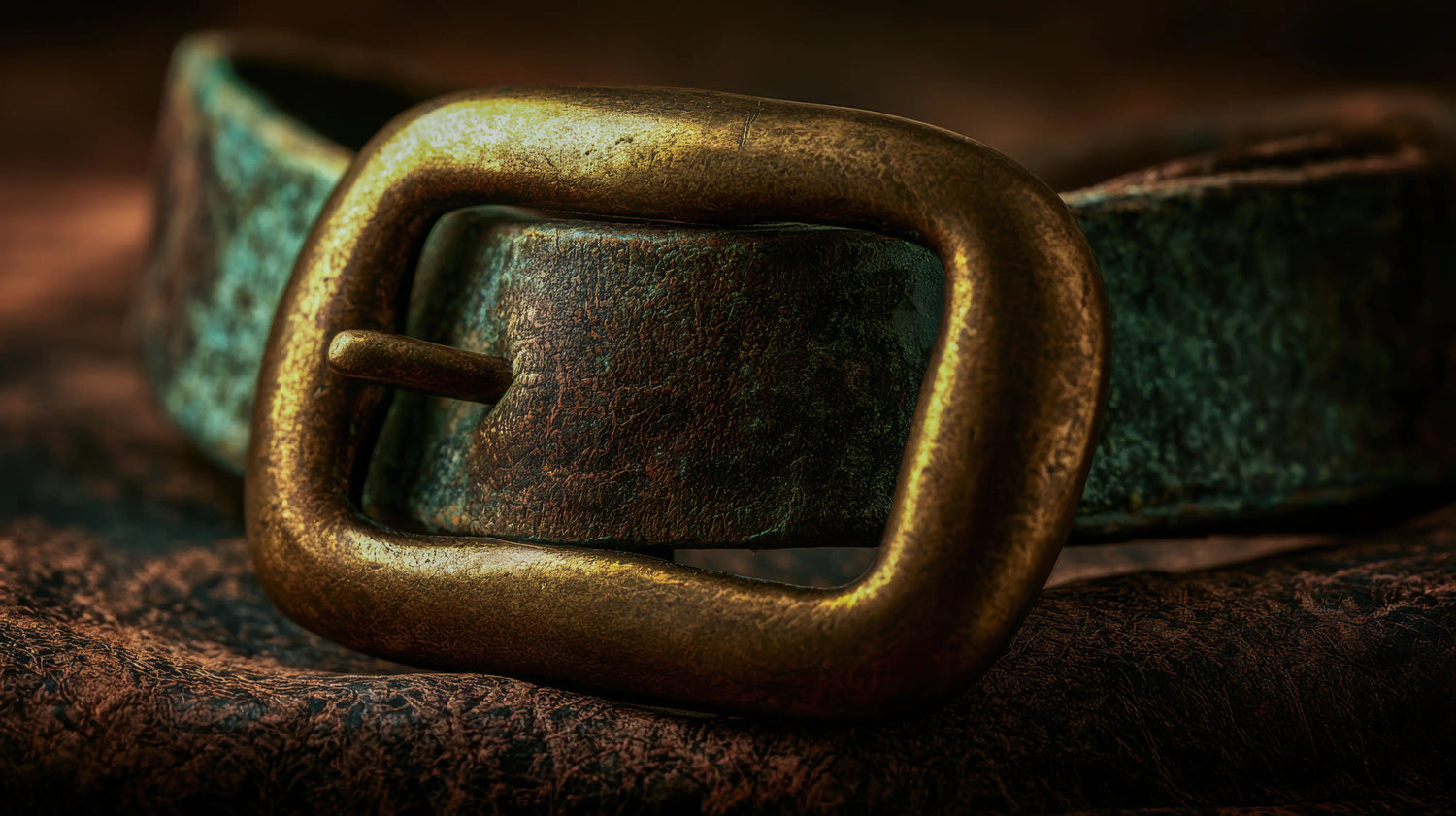
Finally, there is the unfortunate reality of the long abandonment. Sometimes, a vintage piece is simply forgotten in the dark, humid confines of a damp wardrobe, the back of an attic, or a stone cellar for a year or more. When left without moving air or natural light, the damp-climate mould of the British Isles will quietly attempt to reclaim the natural materials. You might retrieve your bag only to find white, powdery spores blooming across the front leather panel, or notice that the beautiful brass hardware is suffocating under a thick, highly corrosive crust of green verdigris.
If the long abandonment has already happened and the damage is done, never reach for harsh chemical bleaches, modern household surface sprays, or abrasive scouring pads to save the piece. These will instantly burn the soul from the hide and permanently scar the leather. Take the bag outside into the open air immediately so that the disturbed spores do not spread inside your home. Take your trusty horsehair brush and briskly sweep away all the active, loose surface mould. You must ensure you wash the brush thoroughly afterward in hot, soapy water so it does not contaminate the bag later.
Next, apply a targeted wipe of The Spore and Mould Wash (the exact dilution can be found in The Apothecary) to a soft, disposable cloth. Gently dab the affected areas—do not scrub aggressively, as this will push the spores deeper into the pores—to kill the biological root of the damp mould safely. Turn the cloth frequently to a clean side as you work. Once the mould is completely neutralised and killed, the bag will likely still carry a musty, damp odour and a layer of old, sticky soot. Vintage leather always carries a distinct, earthy smell, but a "musty" scent means it has been trapped in humidity for far too long. To cure this, simply place the bag outdoors in a shaded spot with a gentle breeze—safely away from direct sun—for twenty-four hours. The leather will naturally exhale, and the mustiness will quickly fade.
After it has aired out, take a fresh, slightly damp cloth, apply a heavily diluted drop of The Gentle Hide Cleanser (refer to The Apothecary), and give the entire bag a very gentle, sweeping wipe down to lift the remaining dirt. Let the leather dry completely in the fresh air. For the severely oxidised metalwork, take a simple cotton bud and dab a small measure of The Workshop Brass and Copper Lift (our salt and vinegar paste from The Apothecary) directly onto the heavy green verdigris. Wait a moment for the natural, active acids in the paste to work through the crust, and then wipe it away cleanly. Be exceedingly careful not to let this active paste sit on the surrounding leather, as it can leave a permanent mark.
Because all of these natural astringent washes and acidic pastes will have stripped the surface of its protective, curried fats, you must always finish this extensive rescue operation by massaging a very generous amount of The Stable Heritage Adjustment deep into the leather. This final, crucial step returns the rich, protective oils to the core of the hide, re-establishes the weather barrier, and brings your newly rescued, heirloom bag completely back to vibrant, enduring life.
The Final Word
Ultimately, caring for your bag is simply about paying attention to it. We have put in the heavy labour at our bench to bring this historic leather back to life, but its future now depends entirely on how you look after it. It really doesn't ask for much—just regular brushing, keeping it well away from harsh heat, and feeding it when it tells you it's thirsty. Treat it well, use it daily, and this leather will reward you with a deep, unique patina that records every step of your shared journey. If you are ever in doubt, or when the seasons change, the foundational guides and recipes within The Apothecary are always here to help you keep your bag ready for the years ahead.