

The Process
The alchemy of salvage: honouring the stable’s legacy at the bench
The Philosophy of Reclamation
The journey of a Caracoda Equestrian piece doesn't begin with a sketch on a draughting table; it begins with a rescue. In the quiet of our Canterbury workshop, we believe in the inherited. We know that the finest materials have already proved themselves through years of service, trial, and honest labour. Every scrip and heirloom bag we craft is born from a vintage English saddle—tack that has carried riders through hunting fields, quiet hacks, and long summer rides. When these saddles reach us, they are often weathered by time, their stories etched into the grain of the hide. Our role is not to erase that history, but to honour it by giving it a second, more elegant purpose. We are the custodians of this endurance, ensuring that what was built to last a lifetime can endure for generations more. In a world that often rushes towards the disposable, we choose to stay rooted in our traditional heritage, creating pieces you can truly rely on.
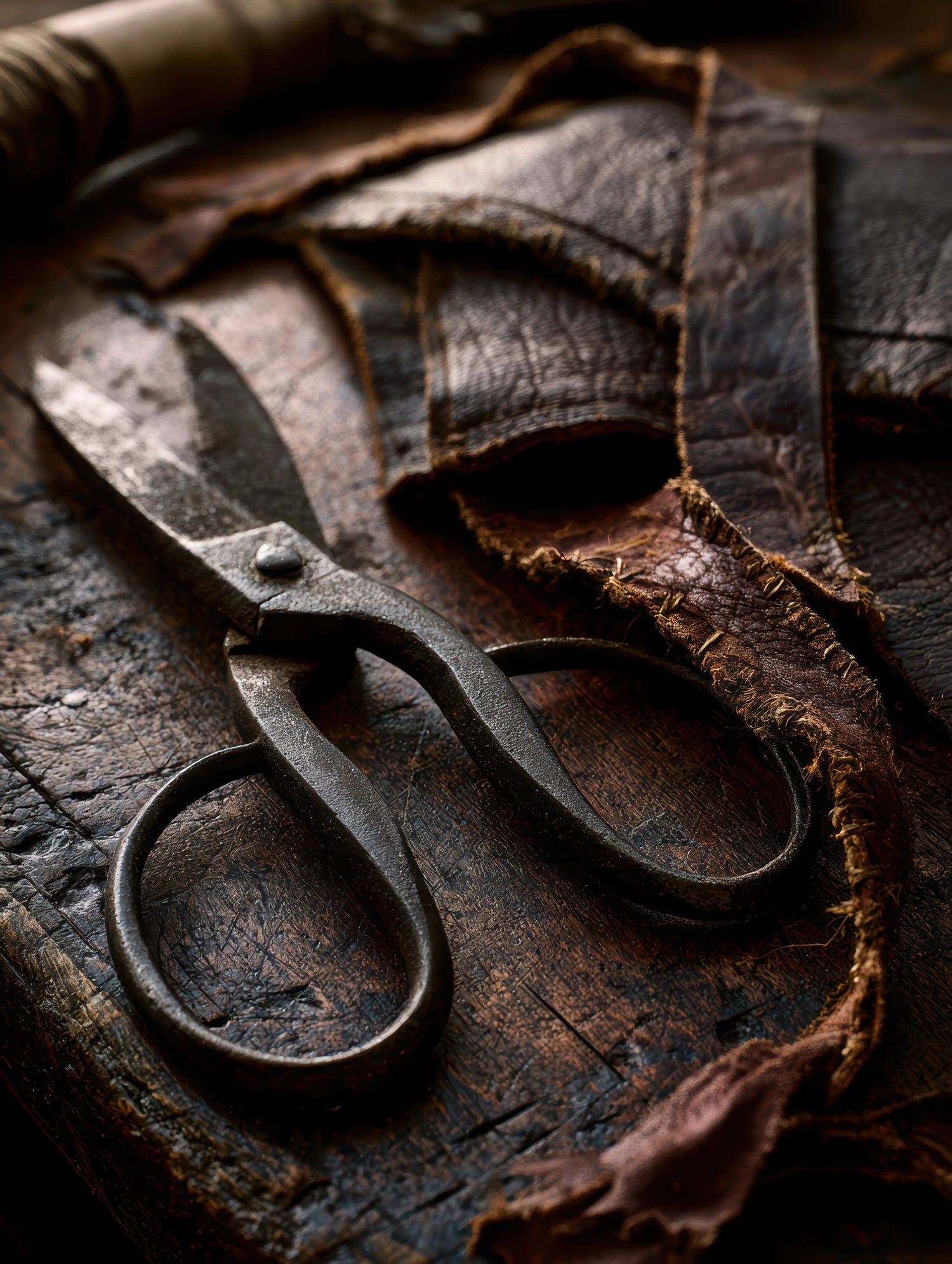
Phase I: The Disassembly
To build something truly resilient, we first need to understand the anatomy of the original. Disassembly isn't just taking things apart; it is a careful process of archaeological evaluation and physical excavation. Wrestling with decades-old, weather-hardened saddlery requires immense patience, significant physical effort, and a deep respect for the original saddler's craftsmanship. We are not merely cutting leather; we are unearthing the history embedded within the piece. Each saddle arrives carrying the heavy imprint of its past life—the sweat of the horse, the friction of the rider, and the dust of countless shires and stables.
The physical dismantling is a strenuous, deliberate unravelling. Layer after layer must be painstakingly peeled back. We carefully sever the exhausted, blackened waxed threads by hand, separating the heavy skirts from the seat, releasing the tightly packed flocking from the panels, and exposing the solid structural tree beneath. As we dismantle these hidden layers, we often uncover the original signatures of the maker, forgotten historical repairs, and a sheer density of material that simply does not exist in modern mass production.
This unravelling allows us to inspect the leather hide by hide, panel by panel. We look for the hallmarks of enduring quality: the dense packing of the fibre, the depth of the original tan, and how the leather has borne the immense weight of its history. We evaluate every square inch, effectively mapping the salvaged hides. We must read the original stress points, the natural stretch marks, and the scars of its working life to dictate the material's next incarnation.
During this intense evaluation, we make critical, unforgiving decisions. We isolate the sections that possess the flawless face required for the front of a scrip, selecting only the most robust, unyielding panels to serve as the structural gusset. We identify which heavy, deeply grained leathers have the rugged character needed to become our load-bearing straps. Finally, we extract these chosen cuts, discarding the rusted hardware and perished foams of the past to make way for the solid brass fittings that define our current work. This is where the raw material is finally liberated from its original form, assessed for its inherent strength, and prepared for the heavy transformation ahead.
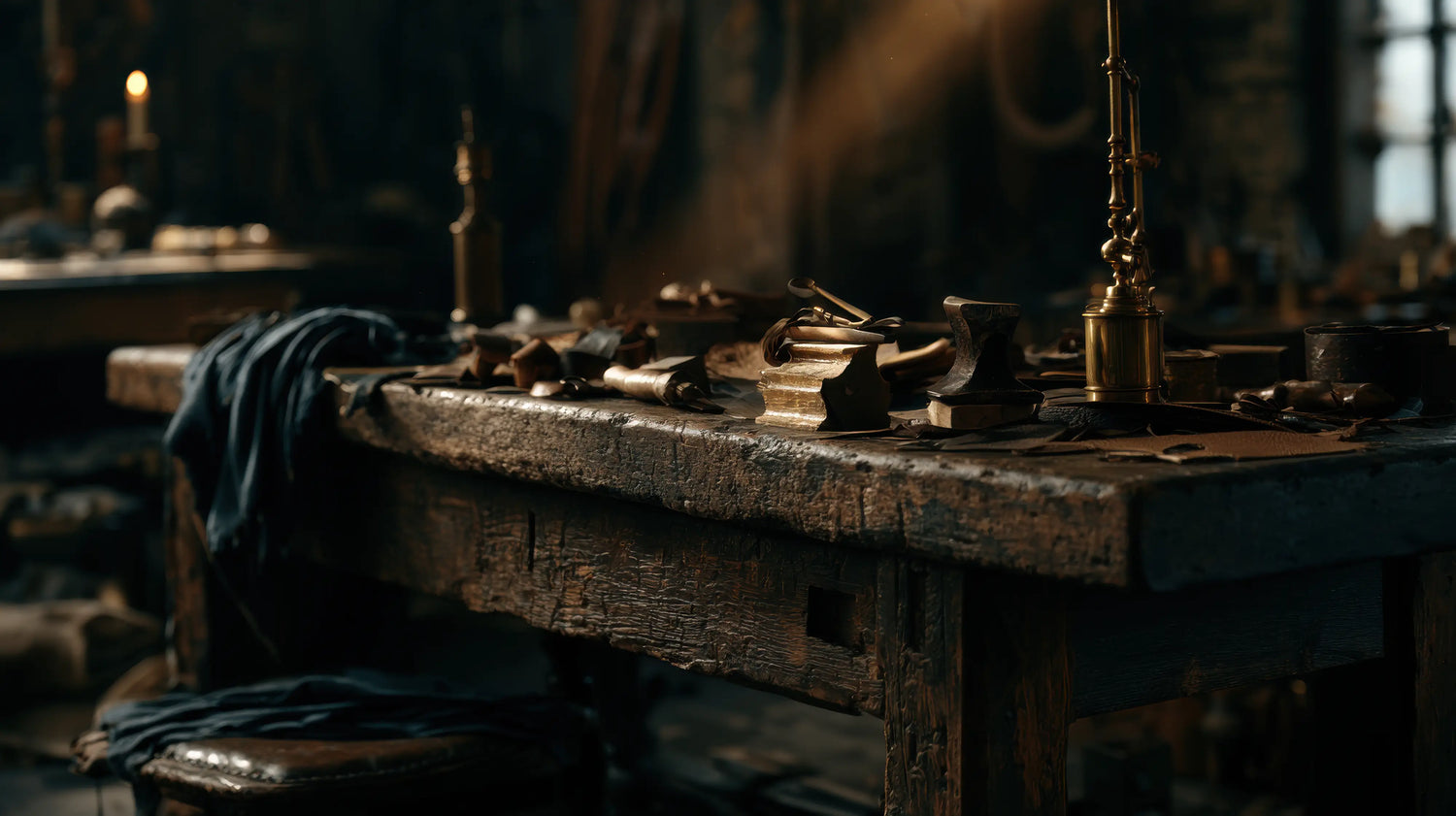

Phase II: The Restoration
Standard chemical cleaners can instantly strip the life from historic leather, destroying the very character and patina we actively seek to preserve. Antique leather is a profoundly delicate, organic material; its fibres are often parched, stiffened by decades of neglect, and desperate for nourishment. To safely bring these salvaged hides back from the brink, we must awaken every single cell and fibre from within. We begin this alchemy with our bespoke Stable Heritage Adjustment. This carefully balanced apothecary blend is crafted from distilled water, pure neatsfoot oil, natural beeswax, liquid castile soap, and a subtle touch of borax.
This unique compound is gently worked deep into the grain entirely by hand. It lifts decades of embedded stable grit, mud, and ancient sweat whilst beginning the vital work of rehydrating the parched internal structure. The restoration of a severely weathered saddle is not a matter of hours, but a deeply meticulous process spanning several days. We cannot rush the leather; we must allow the exhausted hides to slowly drink in the nourishment at their own pace.
This slow, methodical coaxing back to life requires us to massage the restorative oils into the leather, carefully relaxing deep cracks and softening the stiffened panels without overwhelming or collapsing the cellular structure. We watch the colour deepen and the natural flexibility return as the dry, brittle fibres swell with newfound moisture. It is a true resurrection of the material, honouring the life it once lived whilst preparing it for the centuries ahead.
Once the original suppleness is fully restored, we must ruthlessly protect it. To seal this renewed vitality, we massage in a heavy, handcrafted finishing compound. This secondary, traditional leather balm marries pure neatsfoot oil—or occasionally sweet almond oil—with rich, unrefined shea or cocoa butter, and a heavy concentration of natural beeswax. This final, protective layer acts as an impenetrable weather shield. It locks the essential conditioning oils deep within the hide, ensuring the resurrected grain is fully safeguarded against the damp, unforgiving chill of the British climate, ready to face the elements once again.
Phase III: The Final Transformation
Creation at Caracoda Equestrian isn't about mass assembly; it is about the quiet, heavy work of transformation. The leather we recovered and nourished in Phase II, reawakened after weeks of methodical restoration, now possesses a unique, resurrected character that simply cannot be simulated by modern tanneries. It is rugged, deeply scarred, and rich with historical patina. Phase III is the precise manual craft required to forge these raw, individual components into our final goods. Every cut, every single stitch, and every heavy fitting is applied by hand, at the bench, with absolutely no room for error.
This phase is where the rugged history of the salvaged saddlery is paired with unyielding structure. We hand-cut each panel and strap using traditional heavy blades, carefully guided by the specific grain, stretch, and structural strengths we identified during the initial disassembly. We actively choose not to hide the imperfections of the leather's past life; instead, we celebrate them, ensuring that deep scars and uneven tones are positioned to highlight the bespoke character of the final piece. We evaluate the dense anatomy of the hide: the thickest, most durable leathers are strictly designated for our load-bearing straps, whilst the softer, deeper-grained panels are reserved to become the front face of a scrip or pannier.
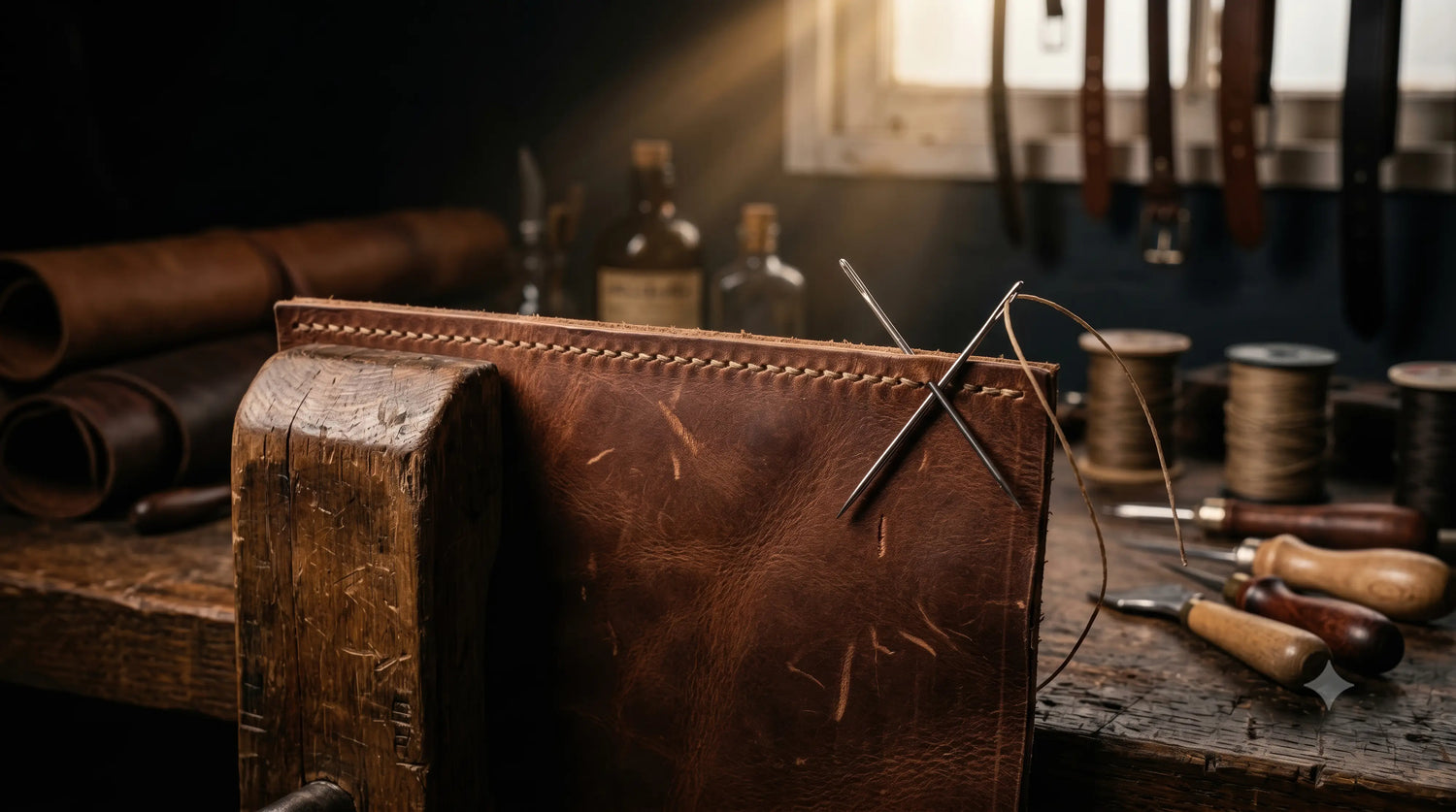
Joining these heavy materials requires methods that date back centuries. We rely entirely on the traditional saddle stitch—the absolute gold standard of durability that machine production fundamentally cannot replicate. This is a deliberate, highly laborious physical process. It begins with a diamond-tipped saddler’s awl, driven by hand through thick layers of dense hide to create the pathway. We then use two blunt needles and rugged, waxed linen thread, working them simultaneously from both sides of the seam to tension the stitch. Every single stitch is independently locked, guaranteeing that the seam cannot unravel, even if a thread were to be completely severed in the field.
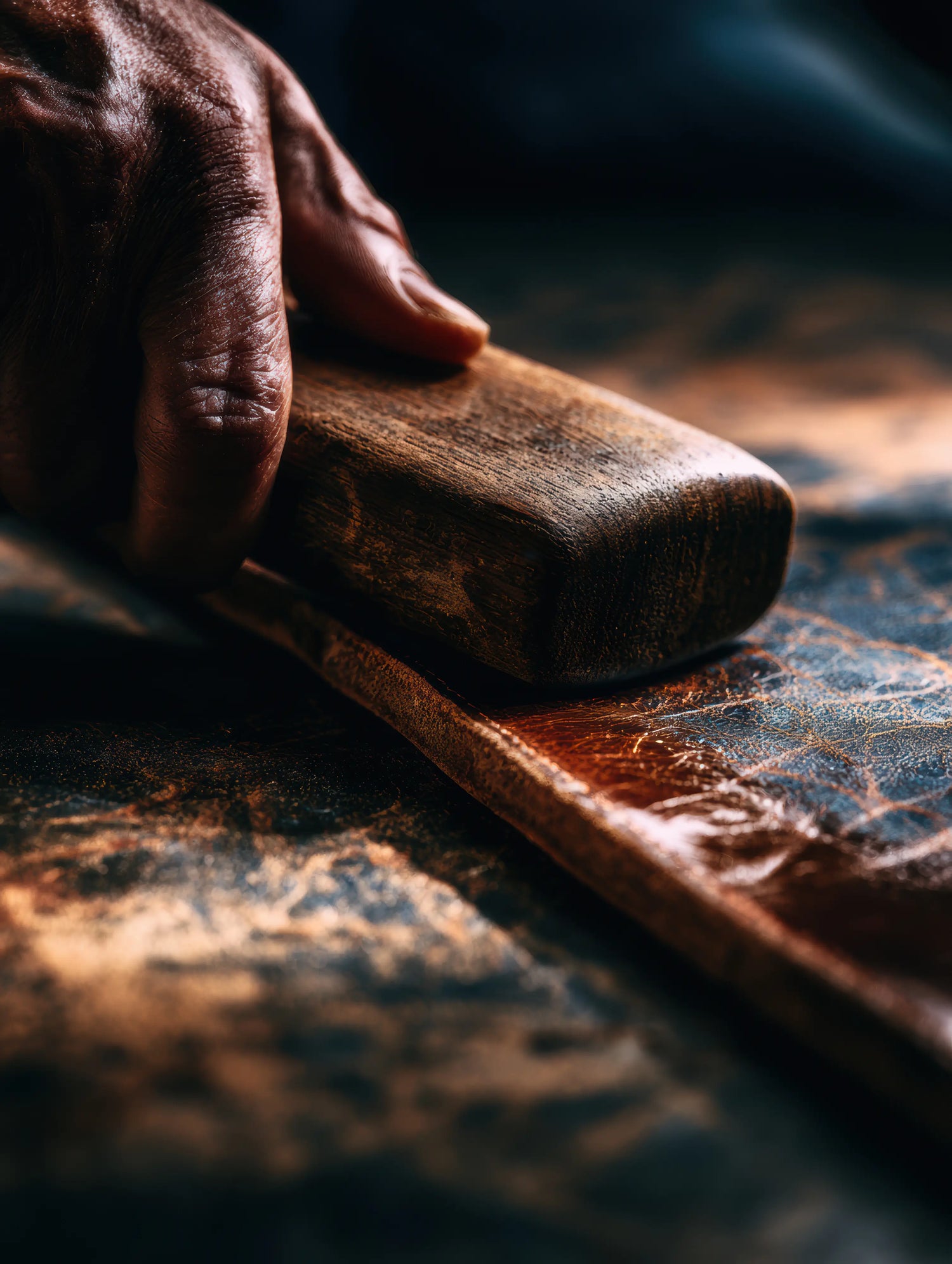
Once assembled, the exposed raw edges must be painstakingly finished. Using a traditional wooden edge slicker—the very tool shown beside this text—we apply intense, repetitive friction and pressure. Combined with a heavy application of natural beeswax, this heat physically melts and binds the raw fibres of the leather together, meticulously hand-burnishing the edge until it develops a deep, glass-like sheen. This acts as a vital, impenetrable seal against the British damp. Finally, we set our hardware, integrating heavy, solid brass buckles and hand-hammered solid brass rivets struck securely on the anvil. It is the uncompromising fusion of salvaged history and resolute new strength, ensuring that every piece of Caracoda Equestrian luggage is built not just for the coming seasons, but to endure for generations.
The Heirloom Standard
The meticulous discipline detailed above is not an exercise in nostalgia; it is an absolute structural necessity. To carry the Caracoda Equestrian marque, a piece must transcend the concept of mere luggage. It must be an artefact of the Seven Kingdoms, forged from salvaged history, raw English brass, and unyielding traditional saddlery techniques.
In an era defined by the disposable and the mass-produced, we take a decidedly contrarian stance. We believe that true luxury is found in permanence. When you commission a piece from our bench, you are not simply acquiring a bag for the current season; you are investing in a functional companion engineered to weather decades of heavy transit. Every scuff, every burnished edge, and every deepening shadow in the leather's grain will chronicle your own journeys, adding to the rich narrative it began in the stable.
This is the uncompromising reality of the heirloom standard. We build these steadfast companions with the solemn expectation that they will eventually outlast their original custodians. They are designed to be passed down—carrying not just your daily provisions, but the enduring legacy of honest English craftsmanship and the unique, irreplaceable patina of a life well-travelled.
THE BENCHMARK OF HERITAGE
Built for the Century
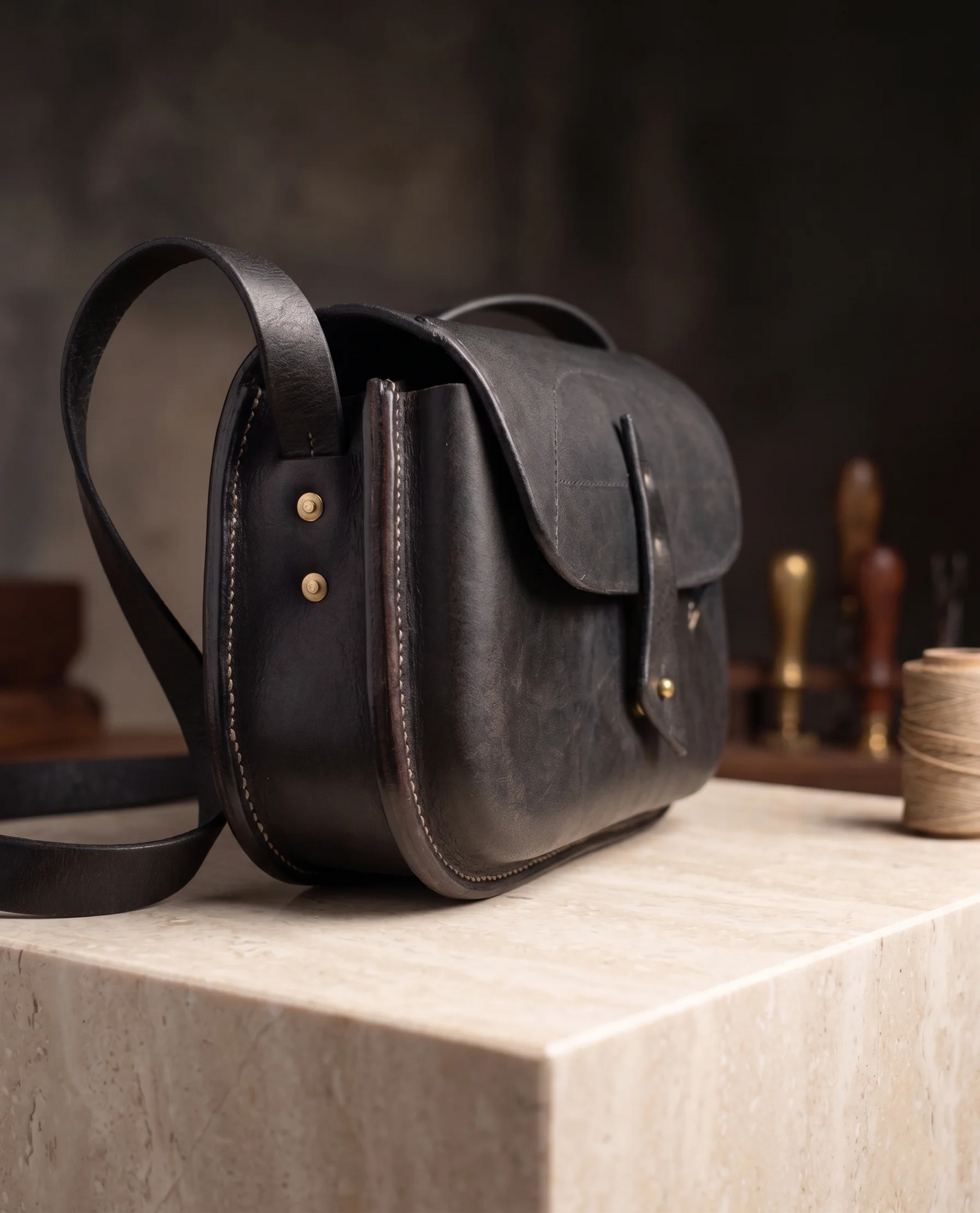
The Caracoda Equestrian hallmark is defined by a trinity of permanence. We begin with 4.5mm Reclaimed Hide—vintage English saddle leather tempered by decades of service and chosen for its unshakeable density. This is not factory-fresh material that will degrade with use; it is historically proven hide that has already withstood the rigours of the field. By rescuing these exhausted saddles and painstakingly reviving their fibres, we ensure your piece possesses a rugged, pre-weathered character that simply cannot be replicated by modern tanneries.
This unyielding foundation is bound together by the Traditional Saddle Stitch, an interlocked seam technically superior to any machine-made alternative. Using two blunt needles and heavy waxed linen thread, our artisans lock every single puncture by hand. Should a thread ever wear through decades of use, the structural integrity of the bag remains entirely uncompromised. This is slow, deliberate labour, ensuring the architecture of your scrip or pannier holds fast under the heaviest of burdens.
Anchored with Solid English Brass, each heirloom is equipped with heavy, sand-cast hardware that will never rust or snap, dulling only into a beautiful, muted patina over time. Our craft then extends to the final, crucial detail: a meticulous Apothecary Burnish. Using our traditional, in-house recipes of natural beeswax and neatsfoot oil, we seal the raw edges against the damp British elements. This represents sixteen years of dedicated artisan mastery—a guarantee that your piece will not only survive the passage of time but thrive, developing a deep, historical patina for the next generation. We build not for the season, but for the century.