
THE APOTHECARY
The traditional care and lifelong preservation of the hide
Welcome to The Apothecary
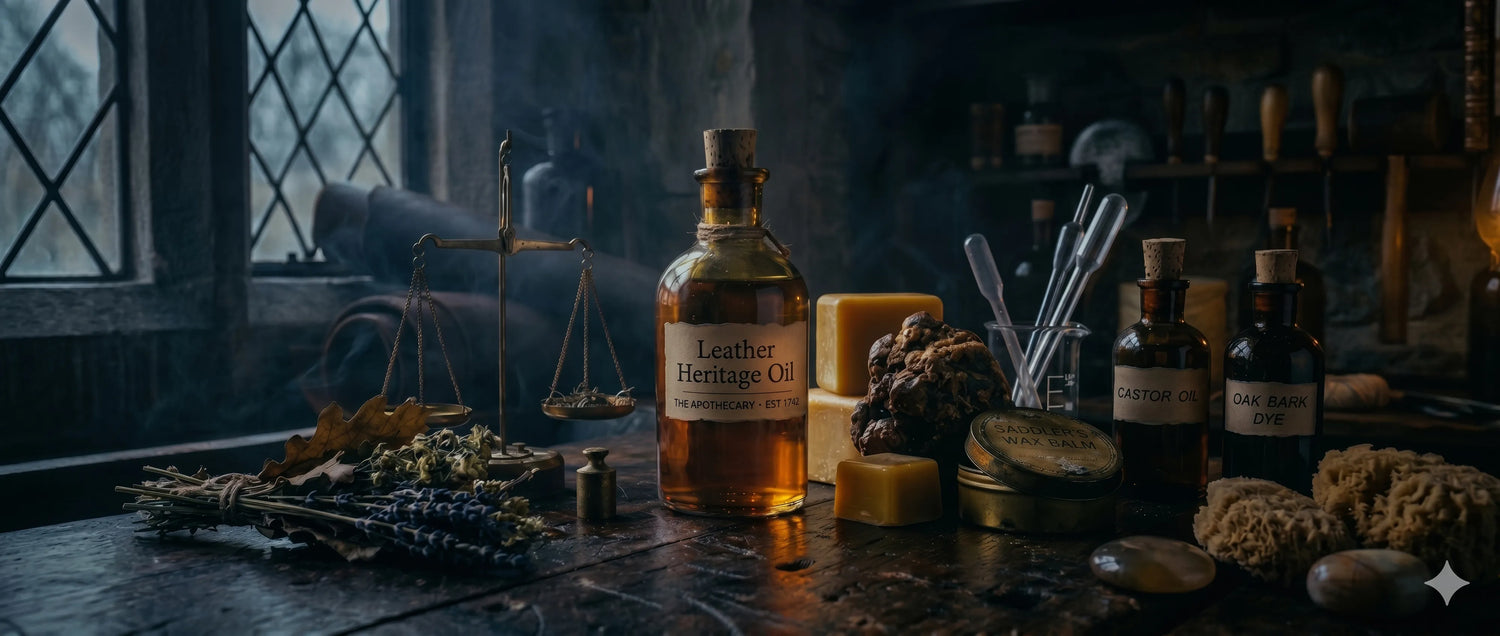
Step past the heavy oak doors of the Caracoda Equestrian workshop, and the air immediately shifts. Here, the scent of crushed botanicals, warm neatsfoot oil, and melting beeswax hangs heavy. It is a quiet testament to a time when the preservation of leather was an honest, natural craft rather than a chemical afterthought. We welcome you here not simply as a customer, but as someone who understands that true heritage requires patience and a reverence for the old ways. This space is the beating heart of our work. It holds the story of the alchemy performed long before a saddler’s blade ever meets the hide, and long after a piece has left our bench to travel out into the world.
To truly understand the lengths we go to in rescuing these heavily scarred vintage saddles, we must first look back through the centuries to see how this remarkable material was originally born. In the era of the old English shires, before the intrusion of modern machinery and synthetic shortcuts, the transformation of a raw hide into enduring saddlery was a passage of seasons. It was an arduous, deeply physical craft rooted entirely in the local landscape. We actively seek out vintage leathers that were born through the ancient, time-honoured method of oak-bark tanning. Hundreds of years ago, the tanneries of the Seven Kingdoms relied on nothing more than the earth, the trees, and the slow, uncompromising passage of time.
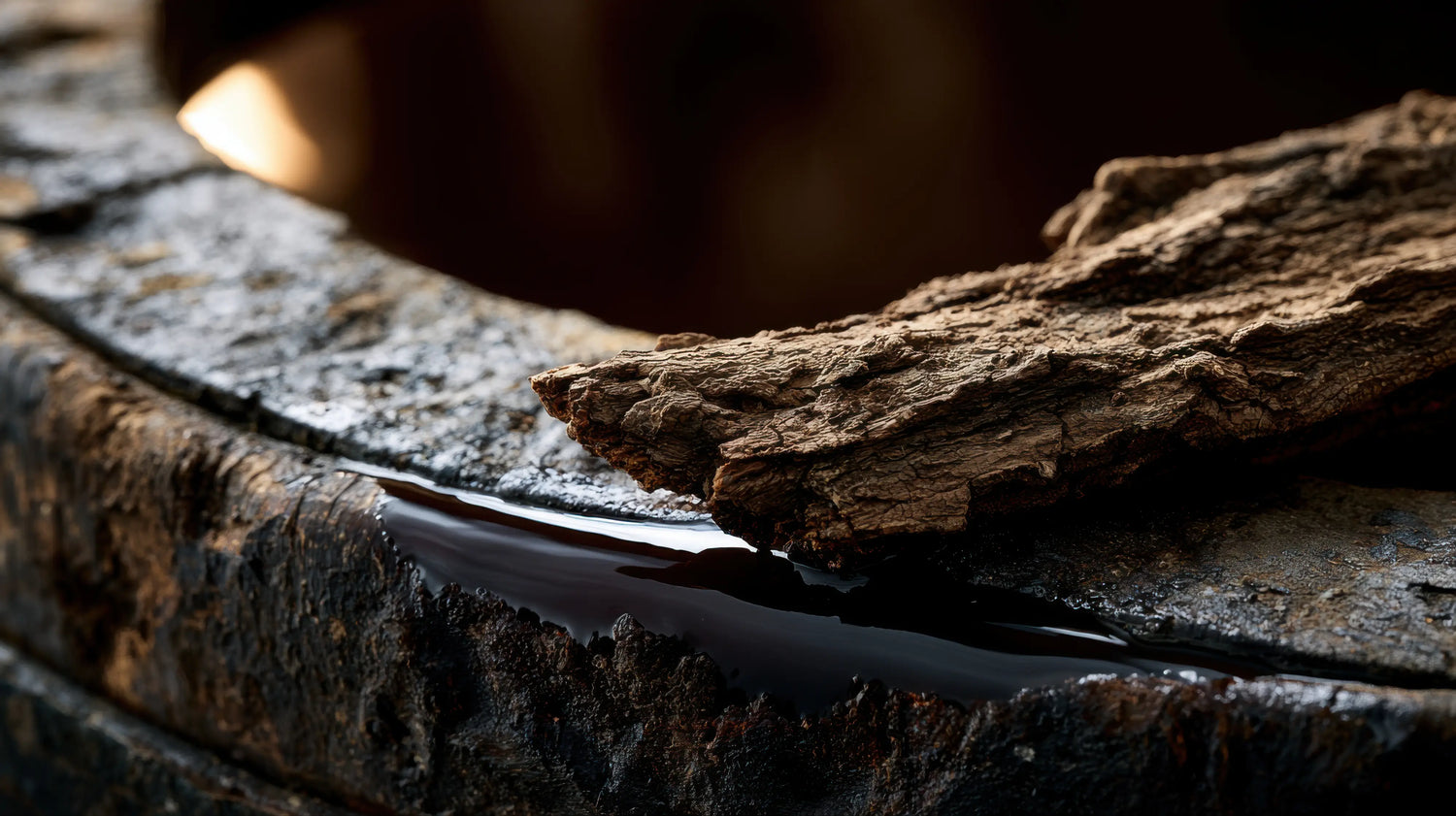
The journey of the leather always began in the quiet of the spring woods. It was only during this brief window, as the sap began to rise and the forests awakened, that the bark of the native English oak could be carefully peeled away from the timber. This raw bark, dense with natural tannins, was gathered by hand and brought to the tanner’s yard to be dried for several years and finely milled. The yards themselves were heavily scented, earthy places, typically relegated to the outskirts of the ancient burhs and towns due to the pungent, demanding nature of the work.
When a raw hide first arrived, it was stiff, unyielding, and entirely unsuitable for the saddler. The master tanner’s first task was to awaken it. The hides were submerged in deep baths of alkaline lime liquor and water to plump the material and loosen the hair. In those days, the tanners would often wade into the waters themselves, using their bare feet to knead the heavy skins for hours. They relied on natural fermentations to soften the raw hide until it became profoundly supple and open, ready to drink in the preservation of the forest.
Once prepared, the hides were moved to the tanning pits. There were no chemical accelerators to rush the work; instead, they were submerged in deep, earth-dug vats filled with the cold, moving waters of local rivers, carefully layered between thick beds of the shredded oak bark. For the first few months, the hides were suspended on wooden sticks in weak tannin solutions. Slowly, meticulously, the tanner would move them into progressively stronger pits so as not to shock or shrink the material. Finally, they were laid flat, one atop the other, in the deepest pits, where they would remain submerged in the dark for nine to twelve months, and sometimes far longer.
In a slow, quiet alchemy, the oak liquors gently replaced the water within the hide. The tannins bound organically with the natural fibres, swelling them and locking them into a state of permanent preservation. This unhurried, painstaking process created a material of immense tensile strength, breathtaking character, and a deep, earthy aroma that modern, factory-rushed leathers simply cannot replicate.
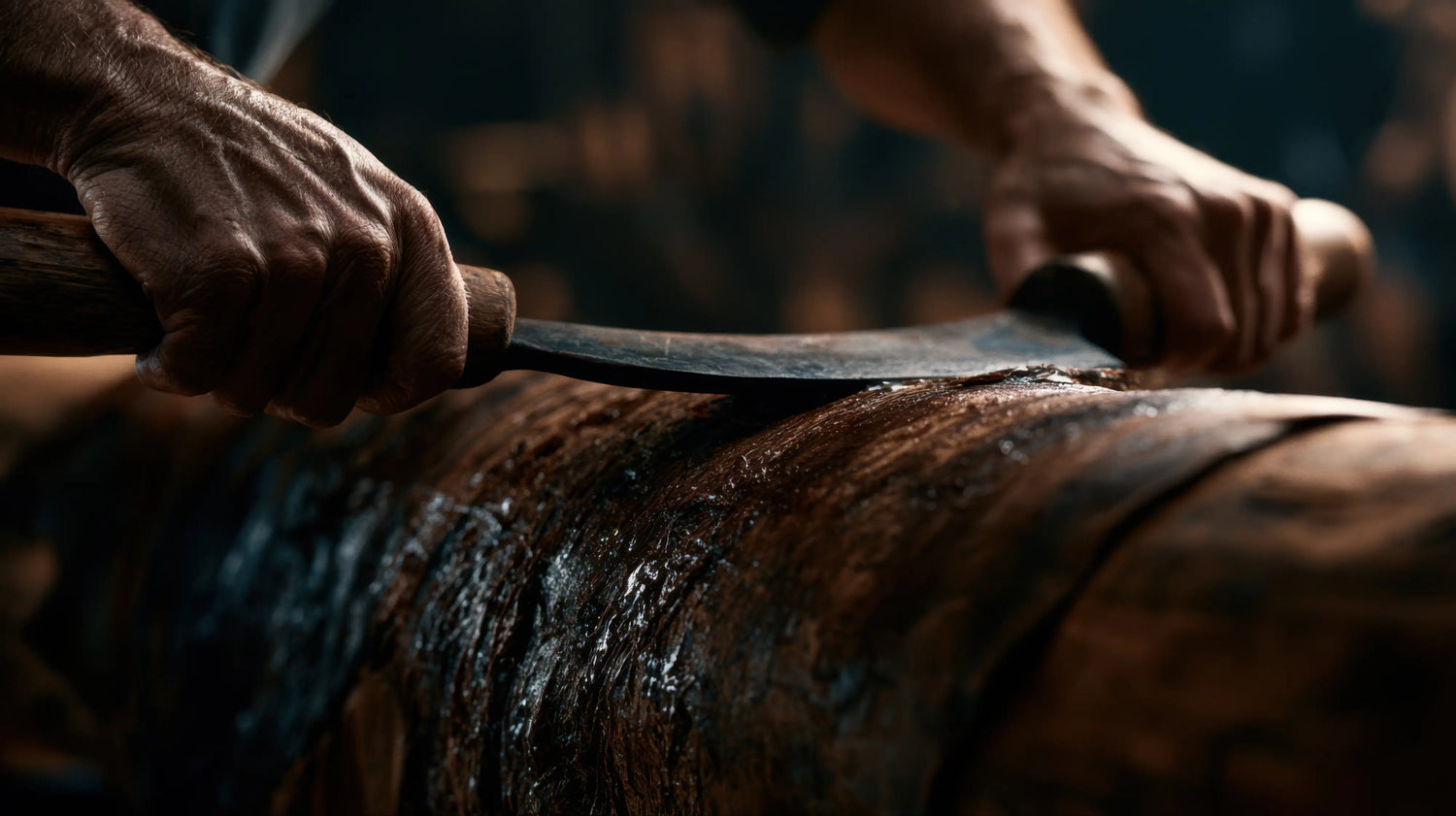
Yet, when the heavy saddlery hide was finally drawn from the pit, the work was only half finished. The wet leather, though preserved, was rough and horny. It now had to pass from the tanner to the currier. The currier was a master of nourishment, and his workshop was a place of heavy labour and rich, melting fats. Standing at a heavy wooden beam, the currier would use long, two-handled blades to painstakingly shave and pare the wet hide down to a uniform thickness by hand.
It was here, often working by the dim glow of candlelight, that the true character of the leather was forged. The currier understood that the hide, having been stripped of its natural life, needed to be stuffed with rich oils to prevent it from drying into a brittle husk. Using heavy wooden slickers, the craftsman would aggressively stretch the wet leather, forcing the water out and immediately replacing it with generous applications of dubbin—a heavy, warm paste traditionally made from dense beef tallow and natural fish oils. As the remaining water evaporated, the heavy greases were drawn deep into the core of the oak-tanned fibres, wrapping every microscopic strand in a protective, nourishing layer of fat.
This deeply physical act of currying gave the leather its profound suppleness, its weather-resistant nature, and its ability to bear the immense weight and friction of horse tack without tearing. It was a functional record of the land itself, carrying the resilience of the oak, the memory of the river, and the absolute dedication of the craftsman.
It is because our vintage leather is born entirely of the forest and the stream, and nourished by the currier's heavy tallows, that we believe it must be maintained exclusively by the provisions of the natural world. Modern chemical solvents, artificial silicone waterproofing, and petroleum-based sealants are the true enemies of this ancient architecture. They suffocate the pores of the oak-tanned grain, trapping decay beneath a temporary shine until the fibres turn brittle and shatter. True preservation relies on continually returning to the hide the exact natural elements it lost during its long journey from the tanning pit, to the horse’s back, and finally to our workshop bench.
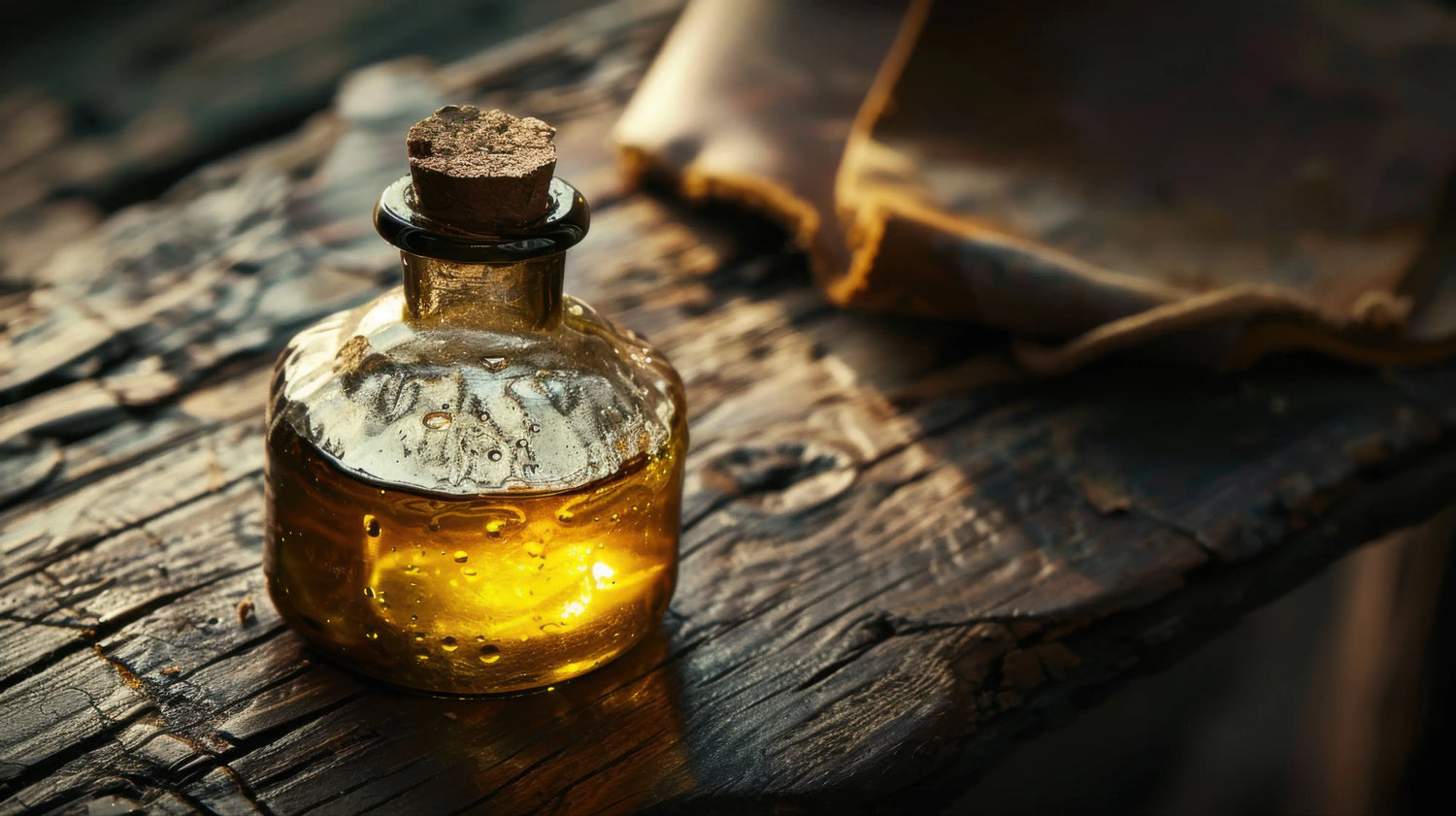
When we turn our attention from the tanning pits to the shelves of the apothecary, the first and most vital provisions we reach for are the heavy oils. To hold a flask of pure oil in the workshop is to hold the very lifeblood of the leather. The hides we rescue at Caracoda Equestrian have endured decades of sun, wind, and rain across the shires, and over those long years, the rich tallows stuffed into them by the original curriers have slowly dried away. Without lubrication, the microscopic collagen fibres within the leather become parched, hollow, and brittle. Every time an old saddle flexes or the flap of a scrip is folded, those dry fibres grind against one another, creating an invisible internal friction that eventually causes the hide to crack and shatter. Oil is the only true remedy. It dives deep beneath the surface grain, seeking out the heart of the leather to wrap each individual fibre in a protective, yielding coat, restoring the profound suppleness required for a lifetime of heavy transit.
Yet, not just any oil will serve the bench. The absolute foundation of traditional English leatherwork, and the heavy soul of our own workshop emulsions, is pure neatsfoot oil. Its history is as grounded as its earthy scent. Historically, true neatsfoot was painstakingly rendered by boiling the lower leg bones and feet of cattle—though crucially, never the hooves. There is a profound, natural magic behind this specific biological source. Because cattle stand upon freezing earth and snow, nature designed the fats in their lower extremities to remain liquid at incredibly low temperatures to prevent their legs from freezing. When this unique oil is introduced to heavy saddlery, it carries that exact same biological resilience into the hide. It penetrates deeper than almost any other natural fat, and when the biting winter frosts of the countryside set in, neatsfoot oil will not crystallise or stiffen within the leather. It keeps the bag yielding and soft, no matter how harsh the climate.
However, one must be fiercely protective when sourcing it today. The modern market is flooded with 'prime' neatsfoot oil, a highly deceptive label which means the natural fat has been heavily cut with cheap petroleum distillates. We reject these entirely. Petroleum suffocates the natural pores of oak-tanned leather and, over time, will actively rot the traditional waxed linen thread used in our two-needle saddle stitching. We seek out only one hundred percent pure neatsfoot, ensuring the hide can breathe exactly as it did a century ago.
While neatsfoot governs the heavy hides, we also rely on lighter provisions, such as pure sweet almond oil. This is a remarkably forgiving, highly accessible oil that we often recommend to custodians crafting their own maintenance balms at home. It does not carry the heavy, sometimes uncompromising odour of neatsfoot, and it is slightly less prone to permanently darkening the lighter shades of vintage leather. It is also deeply nourishing to human skin, making it the primary ingredient in our own workshop hand salves. Working with antique leather, heavy canvas, and raw brass draws the moisture straight from a craftsman's hands, leaving them cracked and dry. Sweet almond oil absorbs rapidly to heal the skin without leaving the fingers too greasy to properly handle the awl and the saddler's needle.
It is equally important to understand which oils must never cross the threshold of the workshop. We strictly avoid all common culinary oils, such as olive or vegetable oil. While they may temporarily darken and soften a parched hide, they are biologically prone to rapid oxidisation. Over time, they will turn profoundly rancid within the matrix of the leather, souring the bag from the inside out and encouraging the growth of destructive, deep-seated moulds. We also keep raw linseed oil strictly away from the leather. Linseed is a drying oil; as it meets the air, it polymerises and hardens. This makes it an absolutely magnificent provision for restoring the dry, cracked wooden handles of our antique edge bevellers and hammers, but if applied to a saddle or a scrip, it will eventually cure into a stiff, brittle shell, effectively ruining the piece.
Understanding the oils also means respecting their absolute limits. In the enthusiasm of caring for a rescued heirloom, it is a common mistake to drown the leather in oil. The apothecary’s rule is that less is always more. An overdose of oil will overwhelm the internal architecture of the hide, turning the firm, structured leather into a heavy, spongy mass that permanently loses its shape. Worse still, excess oil will eventually seep back out to the surface, attracting abrasive dust and slowly dissolving the natural beeswax we use to seal our heavy-duty seams.
Because these pure, unrefined oils are living natural elements, they command respect even when simply resting on the shelf. To keep our provisions potent and pure, we store them strictly in heavy amber or dark cobalt glass bottles. Light is a silent catalyst for decay; ultraviolet rays will slowly break down the complex molecular chains of natural oils, diminishing their nourishing properties and hastening spoilage. We keep our glass vessels locked in the cool, dark cabinets beneath the workbench, ensuring that when the time comes to mix a fresh batch of the Stable Heritage Adjustment, the oils we pour are as potent, pure, and resilient as the day they were rendered.
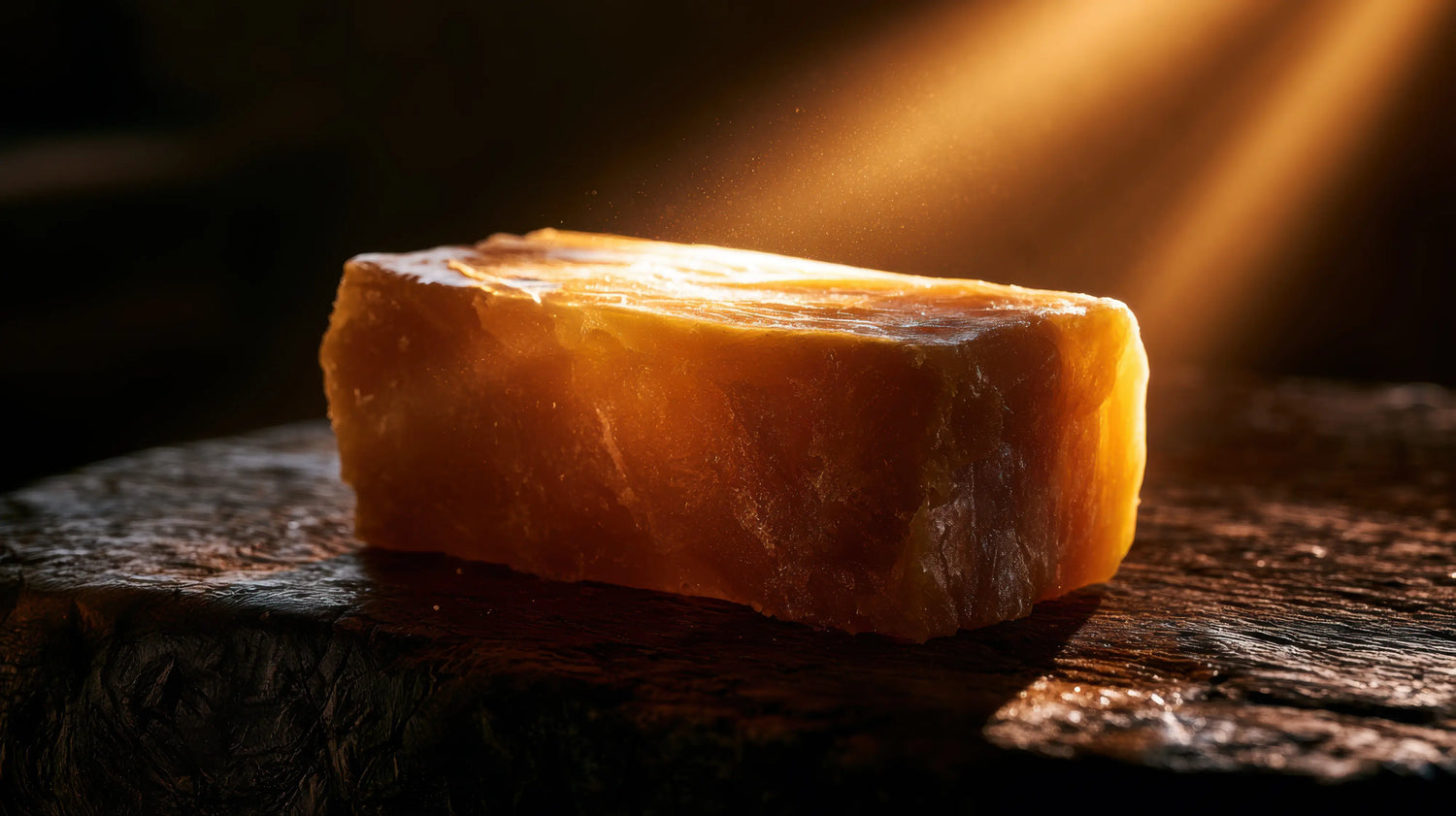
If the pure, unrefined oils act as the lifeblood of the leather, diving deep to nourish the parched internal fibres, then the natural waxes serve as its unwavering armour. To look at the Caracoda Equestrian workbench is to see heavy, golden blocks of wax resting beside the antique tools. They carry the faint, sweet scent of late summer meadows and woodsmoke. While the oil keeps the hide alive, it is the wax that shields it from the unforgiving elements, locking that vital moisture inside and standing as a guardian against the damp British climate.
The absolute sovereign of the saddler’s bench is pure, unbleached beeswax. For centuries, long before the invention of synthetic waterproofers, the monasteries and great estates of the English shires kept apiaries not just for honey, but to harvest this miraculous material. We rely on beeswax because it possesses a unique, breathable intelligence. When massaged into a vintage saddle hide, it does not merely sit on top of the surface like a plastic film; it integrates with the uppermost grain. It creates a robust, hydrophobic barrier that forces the heavy autumn rains to bead and roll away, yet it remains naturally porous. It allows the oak-tanned leather to exhale and breathe, preventing the internal rot that plagues bags smothered in modern, silicone-based sprays.
But the magic of beeswax extends far beyond our nourishing balms; it is fundamentally woven into the very architecture of our bags. Before a single piece of leather is joined together, we take our heavy linen thread and draw it vigorously by hand through a solid block of beeswax, sometimes blended with a touch of natural pine rosin. This coats the linen, lubricating it so it can be pulled cleanly through the dense, resistant hide without fraying. Once the traditional two-needle stitch is pulled tight, the wax cools and hardens within the awl hole, permanently locking the seam in place and sealing the thread against water damage. We also melt pure beeswax directly into the raw, cut edges of our thickest leather panels, burnishing them with a wooden slicker until the friction melts the wax into a smooth, glass-like edge that repels the weather.
While beeswax is our daily companion, the apothecary shelves also hold provisions from further afield. During the era of the great merchant fleets, English craftsmen were introduced to carnauba wax, a tremendously hard, natural secretion harvested from the leaves of tropical palms. Carnauba is significantly denser and possesses a much higher melting point than beeswax. We keep it strictly for when a piece demands an uncompromising, brilliant shine. Because it is so hard, it does not yield easily to the warmth of a hand; it requires vigorous, rapid buffing to melt and bond. We use it sparingly to bring a high polish to the rigid, structural panels of our heavier panniers, or to burnish the antique wooden handles of our workshop tools, giving them a durable, lacquered finish that feels incredibly smooth in the hand.
However, one must know exactly when to leave the carnauba on the shelf. Because it cures into such a rigid shell, applying it to the flexible areas of a bag—like the gussets or the bending strap of a scrip—is a mistake. As the leather moves, the hard carnauba will micro-fracture, leaving a white, powdery residue deep within the creases of the hide.
Indeed, understanding wax means understanding the danger of a heavy hand. A common misstep for a customer eager to protect their new companion is to slather the leather in thick layers of wax. Because wax acts as a sealant, an overdose will completely clog the ancient pores of the hide. Rather than sinking in, the excess will build up on the surface, creating a dull, sticky, grey film that acts like a magnet for abrasive dust and dirt. When applying any wax-based balm, less is always more. It should be applied sparingly, using the natural heat of your bare fingertips to gently coax the wax to yield and melt seamlessly into the grain.
Equally important is knowing which waxes to banish entirely. We strictly forbid the use of paraffin wax in our workshop. Paraffin is a cheap, modern byproduct of the petroleum refining process. While it may mimic the look of natural wax, it is entirely lifeless. It suffocates the leather, offers no nourishing properties, and over time, its petroleum base will actively dry out and degrade the natural fibres of the hide. We seek out only pure, apiary-grade beeswax, retaining all its natural propolis and golden colour.
Because these waxes are pure and unrefined, they demand respect in how they are kept. We store our solid blocks wrapped simply in brown paper or unbleached cotton, tucked away in the cool, dry drawers of the bench. Extreme heat will obviously melt them, but extreme cold will render them brittle and prone to shattering. Most importantly, if left uncovered on a workbench, the naturally tacky surface of pure wax will silently draw sawdust, dirt, and debris from the air, ruining its purity before it ever touches a batch of balm.
This protective nature is precisely why we incorporate beeswax into the salves we use on our own skin. After a long day of hauling heavy, abrasive hides and pulling waxed thread, a craftsman’s hands are left raw and depleted. When we melt beeswax into our sweet almond oil, it forms a breathable, protective glove over the skin. It locks the soothing oils into our hands and shields them from the damp, biting cold of the winter workshop, ensuring we are ready to return to the bench the following dawn.
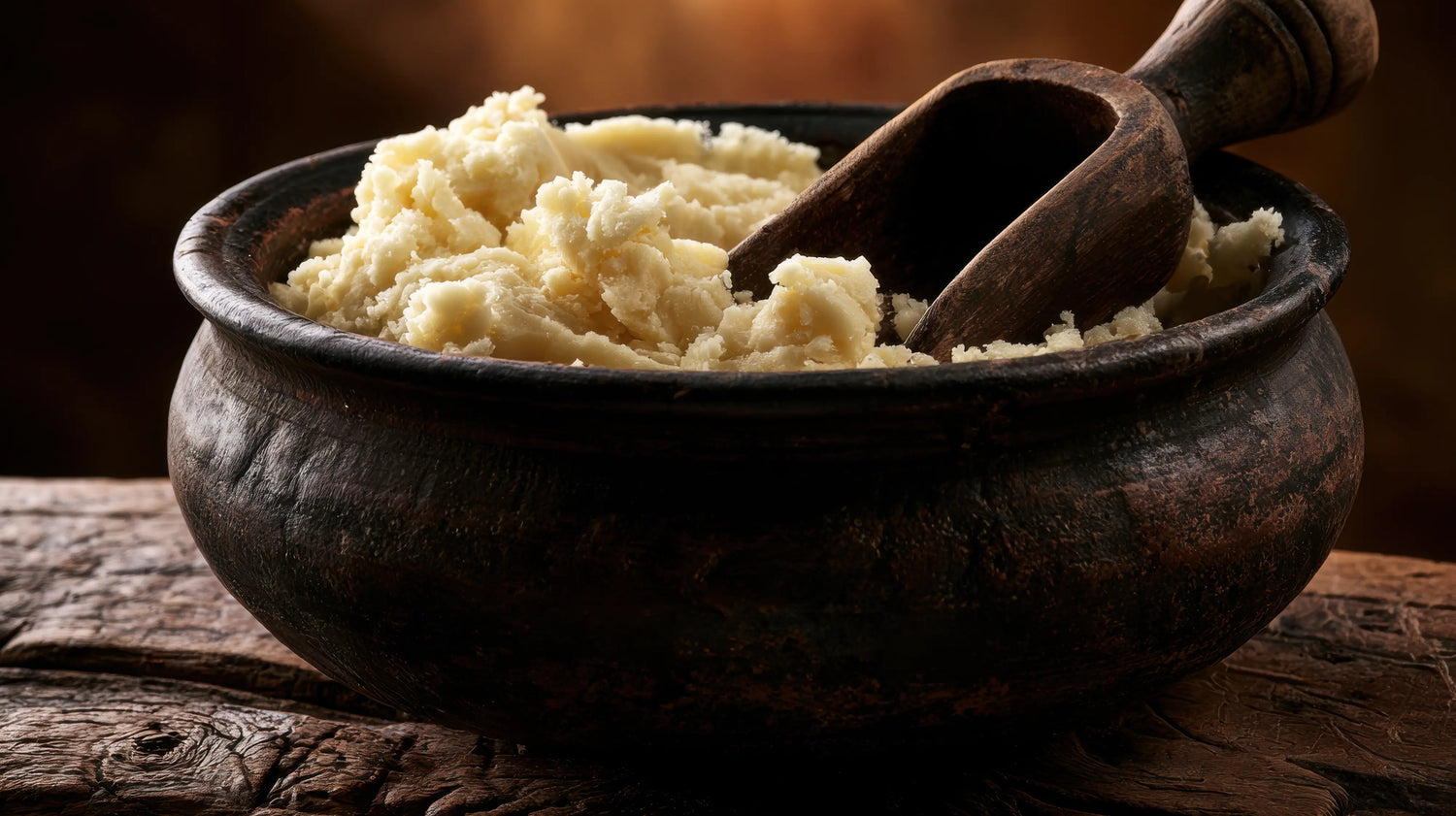
If pure oil is the lifeblood that penetrates deep into the hide, and wax is the resilient armour that shields the surface, then the heavy fats and raw plant butters are the vital substance that binds them together. In the apothecary, we view these dense, unrefined emollients as the bridging agents. They are the crucial middle ground that transforms a harsh mixture of liquid oil and solid wax into a rich, yielding, and luxurious balm that can be effortlessly worked into the leather by hand.
Historically, the English currier’s bench relied almost entirely on tallow. Rendered from the dense suet of beef or mutton, tallow was the heavy, uncompromising fat used to create traditional dubbin. It possesses a remarkable ability to soften the thickest, most stubborn saddlery leathers, feeding the fibres with a heavy grease that repels water beautifully. We still hold a deep reverence for high-grade tallow, reserving it for our most robust winter weatherproofing blocks, as it provides a rugged density that plant-based alternatives struggle to match in freezing conditions. However, working with animal fats requires a master’s understanding of preservation. If tallow is poorly rendered or sourced cheaply, it retains impurities that will eventually turn rancid, souring the leather and attracting pests.
This is why, for our daily workshop emulsions and the balms we recommend to our customers, we turn to the immense nourishing power of raw, unrefined plant butters—specifically shea and cocoa. These natural butters are nothing short of miraculous for both the hide and the hands that tend it.
We seek out raw shea butter that still carries its natural, earthy, slightly nutty aroma. Shea is a beautifully forgiving fat. It melts at just around the temperature of human skin, meaning that the moment you take a measure of balm between your fingertips, the butter yields and becomes a rich liquid. As it is massaged into a vintage scrip or satchel, the shea acts as a carrier, pulling the heavy neatsfoot oil deeper into the pores while leaving the surface of the grain feeling incredibly soft and conditioned. It actively encourages the development of a dark, complex patina over time, feeding the surface of the leather without leaving it feeling wet or overly greasy.
Cocoa butter, by contrast, is much harder and carries a faint, comforting scent of roasted cocoa. We use it when a salve requires a bit more structure and resilience. It provides a phenomenal, smooth glide across the leather and leaves behind a subtle, dry sheen that feels wonderful to the touch.
These plant butters are also the absolute saviour of the saddler. Pulling heavy waxed thread through thick leather day after day leaves a craftsman’s fingers split and raw. The very same shea and cocoa butters that condition the ancient saddlery hides work to deeply heal human skin. When we blend our workshop hand salves, we rely heavily on these butters to soothe the cracks and restore elasticity to our hands, ensuring we can continue our work without pain.
Yet, much like the heavy oils, one must understand the temperament of these fats to avoid overburdening the leather. A common mistake made by customers is to over-condition a bag with heavy butters in an attempt to make it softer. The leather can only drink so much. If a hide is stuffed with an overdose of shea or tallow, the excess fat simply has nowhere to go. When the British weather turns cold, these trapped fats solidify within the leather and are slowly pushed back out to the surface. This creates a cloudy, white haze across the bag known in the workshop as 'fat bloom' or 'spewing'. While it is entirely harmless and can easily be brushed away with a brisk horsehair brush, it is the leather’s way of telling you that it has been overfed.
Because these butters are pure, biological ingredients, they demand careful storage. We keep our raw shea and cocoa in heavy, airtight crocks in the coolest, darkest corners of the apothecary. If left exposed to the warm, sunlit air of a summer workshop, they will slowly oxidise, losing their nourishing properties and eventually spoiling. By keeping them cool and tightly sealed, we ensure that every time we melt them down over the double-boiler, they are as pure and potent as the day they were harvested, ready to bridge the gap between oil and wax and bring an old, scarred hide back to vibrant life.
While the heavy oils, waxes, and raw butters are the grand provisions we use to feed and protect the leather, the reality of rescuing vintage saddlery is that our work begins in the dirt. When an exhausted saddle arrives at our bench, it carries the heavy toll of its past life—caked field mud, soot, horse sweat, and the inevitable bloom of damp-climate mould. Before we can ever hope to nourish the hide, we must first cleanse it. Yet, the old oak-tanned fibres are incredibly vulnerable at this stage. If we were to attack them with harsh, modern chemicals, we would destroy the very soul of the leather we are trying to save. Therefore, our apothecary relies on a humble but powerful trio of natural cleansers and astringents: pure castile soap, white vinegar, and natural pine rosin.
The absolute cornerstone of our washing process is liquid castile soap. For generations, the standard advice for cleaning tack has been to use traditional 'saddle soap', but this is a dangerous misconception we strictly correct in our workshop. Most commercial saddle soaps are highly alkaline, often containing harsh lyes and synthetic degreasers. They are designed to scour, and in doing so, they aggressively strip away the currier’s original fats, leaving the leather shockingly dry, brittle, and prone to immediate cracking. We reject them entirely.
Instead, we use pure, liquid castile soap, which is traditionally saponified from raw olive oil. It is profoundly gentle. When properly diluted with distilled water, castile does not scour the leather; it simply lifts the heavy surface grime, allowing us to wipe away decades of soot without tearing out the vital oils locked deep within the grain. Because it is born of natural plant oils, it is also incredibly kind to the craftsman. After hours of hauling filthy, heavy hides across the bench, washing our hands with pure castile removes the workshop grease without stripping our skin of its natural moisture.
However, mastering castile soap requires discipline. The greatest error a customer can make is using too much soap and working it into a heavy, frothy lather. Leather is heavily porous. If thick soap suds are pushed into the grain and not completely rinsed away, the soap will dry inside the pores, leaving a sticky, dull residue that attracts dust like a magnet. This is why we use it in mere droplets, heavily diluted, creating a wash that is barely thicker than water. We store our castile in clear glass bottles at room temperature, as exposing it to the bitter cold of a winter workshop will cause the natural olive oils to cloud and separate.
While castile lifts the dirt, it cannot fight the silent enemy of the damp English shires: mould. Leather is a living, breathing material, and if a vintage scrip is left forgotten in a dark, humid wardrobe, nature will quietly reclaim it. To combat this, we turn to simple, unadulterated white vinegar.
Vinegar is a mild, natural acetic acid, and it is nothing short of miraculous. When we encounter a bag blooming with white or green spores, we do not reach for bleach, which would instantly burn the collagen fibres and permanently scar the hide. Instead, a careful dilution of white vinegar and distilled water penetrates the spore and kills the mould at its root, neutralising the damp, musty odour that often clings to antique tack.
The magic of this natural astringent extends far beyond the hide; it is the great restorer of the workshop metals. Every Caracoda Equestrian piece is anchored by heavy, solid brass and copper hardware. Over time, as these metals meet the salt of the coastal air or the sweat of the hand, they oxidise, developing a heavy, green crust known as verdigris. A simple paste of white vinegar, flour, and table salt will eat through that oxidation in minutes, restoring the brass to a brilliant shine without scratching the metal. We also use vinegar, heavily saturated with coarse sea salt, as an aggressive, bubbling bath to rescue old, rust-locked awls and hammers found at estate sales, stripping them back to bare, usable steel.
To maintain these fittings, the steward must choose between the gleam of the new and the muted dignity of antiquity. If you prefer the bright flash of polished brass, use a dry, jewelers’ rouge cloth, taking absolute care not to touch the surrounding leather, as metal compounds will permanently stain the grain. For a historical, natural remedy, the careful paste of lemon juice and fine salt may be applied directly to the metal with a cotton bud, then swiftly removed and buffed. However, the true workshop preference is to allow the brass and copper to surrender to time. We advise merely wiping them free of active, green verdigris with a dry cloth, allowing the fittings to quietly earn the dark, burnished patina of true heritage.
Yet, because it is an acid, vinegar demands absolute respect. If a customer drowns their leather in a vinegar wash, they will fatally disrupt the natural pH balance of the hide, causing the fibres to weaken and rot over time. It must be used sparingly, applied only where needed, and the leather must immediately be re-nourished with a rich balm to restore the protective fats the acid may have lifted. Because it is naturally shelf-stable, we keep our vinegar in large glass jugs, ready to be drawn upon whenever the dampness of the season takes hold.
Finally, we look to the anchor of the stitch: natural pine rosin. Also known as colophony, this is the hard, amber-like resin tapped directly from the sap of pine trees. While it is not a cleaner, it is a vital astringent and sealant used in the final, critical moments of our work. Before we hand-stitch a heavy seam, we must ensure our linen thread can withstand decades of tension and weather. Linen, if left raw, will simply rot when it gets wet.
We carefully melt pure beeswax and blend it with crushed pine rosin to create our thread sealant. While the wax provides the waterproofing, the rosin provides the 'tack' or grip. When we draw our threads through this warm, golden block, the rosin coats the linen fibres. As we pull the traditional two-needle saddle stitch tight through the dense leather, the rosin creates a satisfying, heavy drag. It bites into the awl hole, gripping the leather and locking the stitch permanently in place so that even if a thread is eventually severed, the seam will not unravel.
Rosin smells deeply of the ancient forest, a sharp, clean scent that lingers in the workshop long after the stitching is done. But it is temperamental. If a block of rosin is dropped on the stone floor, it will shatter like glass. If left near the heat of the hearth, it will melt into an immovable, sticky puddle on the bench. We keep our rosin blocks carefully wrapped in heavy canvas, stored in the cool, dry drawers alongside our waxes, ensuring it is ready to bind the next rescued relic together for a lifetime of service.
Let us delve into the natural stains, the iron reactions, and the ancient tree saps that complete the chemistry of the hide.
While the oils and tallows give the leather its life, and the waxes provide its armour, it is the alchemy of colour and the sealing of the raw edge that truly finishes a piece of traditional English saddlery. In the modern era, tanneries rely on synthetic drum dyes and heavy, plasticised paints to colour their hides, coating the surface in a uniform, lifeless veneer that eventually peels and cracks. But in the days of the old shires, the craftsman had to coax the colour out of the leather using the natural world, relying on chemical reactions that worked in harmony with the oak tannins already locked within the grain.
One of the most fascinating processes in the historical apothecary is the creation of true, enduring black leather. The old saddlers did not paint the hide; they transformed it. They achieved this through a traditional brew known as vinegar black, or vinegarroon. The method is a beautiful example of workshop patience. A craftsman would take raw, unpasteurised vinegar and drop in handfuls of rusted iron—old nails, broken awl blades, or iron shavings swept from the blacksmith’s floor. This jar was left to steep in the warm, dark corners of the workshop for several weeks.
As the iron slowly dissolved into the acid, it created a potent iron acetate. When this clear, slightly sharp-smelling liquid was painted onto the surface of an oak-tanned hide, a profound chemical reaction occurred. The iron instantly reacted with the deep oak tannins sleeping within the leather, turning the hide a rich, deep, and permanent black right before the craftsman's eyes. Because this was a chemical shift rather than a surface paint, the black would never peel, flake, or rub away onto a rider’s clothes. It became an indelible part of the fibre. We still hold a deep reverence for this ancient reaction, as it represents the perfect marriage of the tannery and the apothecary.
For the rich, earthy browns that define the traditional field scrip, the apothecary looked directly to the forest floor. During the autumn months, the heavy, green husks of walnuts were gathered as they fell from the trees. These husks are incredibly dense with natural juglone, a powerful dark pigment. When boiled slowly in heavy iron pots, they yield a deeply concentrated, dark brown liquor. Sponging this warm walnut stain over a newly carved panel of leather sinks the earthy tones deep into the pores, highlighting the natural scars, the stretch marks, and the deep character of the hide rather than hiding it. It is a slow, messy, and deeply rewarding process that leaves the workshop smelling faintly of wet earth and autumn woodsmoke.
Yet, colouring the face of the leather is only part of the final alchemy. When a heavy piece of saddlery hide is cut, the raw edge exposes the vulnerable, microscopic collagen fibres to the damp air. If left unsealed, these edges will act like a sponge, drawing rainwater deep into the heart of the leather and causing it to rot from the inside out. While we use our blend of beeswax and neatsfoot oil to burnish these edges today, the old apothecary shelves also held a natural wonder specifically for this task: gum tragacanth.
Harvested from the dried sap of thorny shrubs found in the dry, ancient trade routes, this natural tree gum has been a staple of the leatherworker’s bench for centuries. When a small amount of the raw gum is soaked in water, it swells into a thick, slippery paste. A master saddler would apply this natural sap directly to the raw, cut edge of the heavy leather. Taking a wooden slicker—a smooth, grooved hand tool often carved from dense hardwoods like ebony or rosewood—the craftsman would vigorously rub the edge back and forth.
The heat generated by the heavy friction of the slicker forces the natural tree sap deep into the exposed fibres, binding them tightly together. As the moisture evaporates, the gum tragacanth cures, leaving behind an incredibly smooth, glossy, glass-like edge that is naturally fused shut. It is a meticulous, physical process that demands significant elbow grease, but the result is a beautifully domed edge that effortlessly turns away the heavy downpours of the British countryside.
Because gum tragacanth is a pure, natural sap, it is highly susceptible to the cold. We keep our jars sealed tightly in the temperate cabinets of the workshop. If it freezes, the complex carbohydrates within the sap break down, and it loses its crucial ability to bind the leather fibres. It serves as yet another reminder that working with natural materials means working in rhythm with the seasons, treating the provisions of the apothecary with the exact same respect as the vintage hides they are destined to protect.
The Ritual of the Hide
Just as the dispatch riders of the ancient Burh system tended their tack by candlelight, the stewardship of a Caracoda Equestrian piece is a quiet, rewarding ritual. It requires observation, patience, and a respect for the material. Below is the definitive guide to workshop maintenance.
I. The Daily Clearing
After a long journey through dust or dried earth, the piece must be cleared. Use a dedicated, soft horsehair brush to sweep the surface methodically. Dust is highly abrasive; if left to settle, it will grind into the creases of the leather, acting like microscopic sandpaper that slowly dulls the natural sheen and frays the oak-tanned fibres.
II. The Gentle Cleansing
Should the hide accumulate heavy oils, soot, or minor blemishes, it requires a gentle lifting of dirt. Take a piece of lint-free cotton cloth, lightly dampened with pure, lukewarm water. Wipe the surface with sweeping, unhurried motions. Never introduce modern detergents, saddle soaps containing harsh lyes, or chemical degreasers to the leather, as these will strip the soul and colour from the hide.
III. The Natural Cure
Water itself is not the enemy of saddlery leather; forced heat is the true destroyer. Should your bag endure a relentless storm, it must be emptied, shaped, and allowed to rest in a cool, well-ventilated space.
The Absolute Rule: Never place wet leather near an open hearth, a roaring fire, or an artificial radiator. Rapid heating boils the moisture within the fibres, drawing out all essential oils and causing irreversible, deep-seated cracking that no apothecary blend can heal.
IV. The Application of the Salve
Leather will tell you when it thirsts. It may feel slightly rigid to the touch, or its rich lustre may begin to look hollow. When this occurs, take a small measure of your balm. Using the natural warmth of your bare fingertips, work the salve into the hide in overlapping, circular motions. The heat of your hands will encourage the wax to yield and the oils to penetrate. Pay particular attention to the stress points, the binding, and the straps. Allow the piece to rest undisturbed overnight in a temperate room, drinking in the nutrients. On the morrow, take a clean cotton cloth and gently buff the surface to awaken a traditional, soft, and enduring sheen.

The Caracoda Equestrian Formulary
Below are the exact, unfiltered recipes we use at the bench. We share them freely with our customers, fellow leatherworkers, and traditionalists so that the old ways of English saddlery are kept alive. Every recipe here relies exclusively on natural, non-toxic ingredients, crafted to treat and restore without harm.
The Apothecary’s Rule of Measurement
To ensure the perfect alchemical balance, every measurement, percentage, and "part" listed below must be weighed. You must use a precise gram scale. Measuring by volume (using liquid jugs, cups, or spoons) will ruin the formulation, as heavy, solid waxes possess a completely different density to liquid oils. Measuring strictly by weight is the only way to ensure the chemistry holds true.
The Stable Heritage Adjustment
What it does: This is our most deeply guarded workshop emulsion, formulated specifically to resurrect and soften severely cracked vintage saddle leather before it ever reaches the stitching pony. It introduces moisture and heavy fats simultaneously, mimicking the chemistry of the original tannery.
Ingredients: 35g Pure Neatsfoot Oil, 25g Natural Beeswax, 30g Distilled Water, 10g Pure Liquid Castile Soap, 0.5g Borax.
The Preparation: This recipe requires a true emulsification, meaning you are forcing oil and water to permanently bind together. You must work with two separate heat-proof vessels over a gentle double-boiler. In your first vessel, combine the pure neatsfoot oil and the natural beeswax. Allow the gentle steam from the simmering water below to slowly melt the wax into the oil. In your second vessel, gently warm the distilled water. It is absolutely vital that you use distilled water, as the minerals in standard tap water will cause the emulsion to break and separate. Once the water is warm, completely dissolve the borax powder into it, followed by the liquid castile soap. The borax acts as a natural emulsifier, while the soap helps to cut the tension between the water and the heavy oil. Take both vessels off the heat. While whisking the melted oil and wax vigorously and continuously, pour the warm water mixture into the oil in a very slow, thin stream. The liquid will instantly turn cloudy and pale. You must keep whisking without pause as the temperature drops. As it cools, the mixture will suddenly thicken, transforming from a milky liquid into a heavy, rich, golden cream. Pour it into a wide-mouthed glass jar while it is still slightly warm and let it set completely undisturbed.
The Common Wayfarer’s Balm
What it does: Our foundational, everyday nourishment used to bring dry, thirsty leather back to life and maintain its suppleness through the changing seasons. It provides the perfect balance of deep penetration and surface protection.
Ingredients: 50% (by weight) Pure Neatsfoot Oil (or Sweet Almond Oil), 30% (by weight) Unrefined Shea Butter (or Cocoa Butter), 20% (by weight) Natural Beeswax.
The Preparation: Begin by setting up a double-boiler on your stove, ensuring the water is barely at a simmer. Never let the water come to a rolling boil, as a single drop of water splashing into your balm will create a pocket of mould later on. Grate your beeswax into a heat-proof glass bowl; grating it finely ensures it melts quickly without requiring excessive heat. Once the wax has yielded into a golden liquid, add your raw shea or cocoa butter. You must watch the bowl closely at this stage. Unrefined plant butters are delicate; if they become too hot, they will crystallise as they cool, leaving your final balm feeling gritty and sandy instead of smooth. As soon as the butter melts into the wax, remove the bowl entirely from the heat. Gently pour in the neatsfoot or sweet almond oil, stirring the liquid with a wooden implement until the three ingredients are entirely unified. Carefully pour the warm liquid into a shallow tin and leave it in a cool room to set. It will eventually form a firm, beautifully smooth paste that yields instantly to the touch.
The Saddler’s Hand Salve
What it does: A deeply soothing skin rub designed specifically to heal and restore a craftsman's hands or a customer's dry skin after long hours of hauling abrasive canvas, pulling waxed thread, and working in the cold.
Ingredients: 40% (by weight) Sweet Almond Oil, 40% (by weight) Unrefined Shea Butter, 20% (by weight) Natural Beeswax.
The Preparation: Because this salve is destined for human skin, temperature control is the most critical element of the preparation to preserve the healing properties of the raw ingredients. Place your beeswax into a double-boiler over the lowest possible heat. Once the wax has entirely melted, turn the stove off completely. The residual heat of the water will be more than enough to finish the work. Drop your unrefined shea butter into the warm wax, allowing it to melt gently and naturally. Stirring slowly will help it along. Once the butter is incorporated, pour in the sweet almond oil. Stir the mixture gently until it turns a unified, translucent gold. Pour the liquid into a small, shallow jar and leave the lid off until it has completely cooled to room temperature. If you trap the steam by putting the lid on too early, condensation will form and drop back into the salve.
The Gentle Hide Cleanser
What it does: A remarkably mild wash used to lift heavy soot, old field mud, and surface grime without stripping the soul or the essential oils from the vintage leather.
Ingredients: 90g Distilled Water, 10g Pure Liquid Castile Soap.
The Preparation: This is a cold-mix preparation that requires absolute simplicity. Take a clean spray bottle and pour in your distilled water first. Always add the water before the soap; if you put the soap in first and run the water over it, you will fill the bottle with dense foam and have no room left for the liquid. Carefully measure the liquid castile soap and drop it into the water. Secure the spray nozzle tightly. Do not shake the bottle vigorously. Instead, slowly swirl the bottle in gentle circles for a few moments until the heavy soap fully disperses into the water. You will know it is ready when the water takes on a very faint, cloudy tint. Keep an eye on this mixture if you store it in a cold workshop; castile soap will naturally cloud and thicken in cold temperatures, but returning it to a temperate room will quickly turn it liquid again.
The Spore and Mould Wash
What it does: A targeted, natural astringent mixture that safely penetrates and neutralises the root of damp-climate mould spores without burning the oak-tanned collagen fibres of the leather.
Ingredients: 1 Part (by weight) Standard White Vinegar, 1 Part (by weight) Distilled Water.
The Preparation: Precision and purity are the keys to this wash. In a clean glass bottle or jar, measure out equal volumes by weight of standard white vinegar and distilled water. The use of distilled water here is not merely a suggestion; tap water contains chlorine and heavy trace minerals that can react unpredictably with the natural acetic acid of the vinegar and leave chalky white rings on the dark leather. Pour the two liquids together and give the bottle a firm shake. Because there are no fats or soaps involved, the liquids will mix perfectly and instantly. This mixture is entirely shelf-stable and will not spoil, so you can mix a large batch and keep it in the dark cabinet of your bench indefinitely.
The Workshop Brass and Copper Lift
What it does: An active, non-scratching paste used for stripping heavy, green verdigris and dark oxidation from antique hardware, solid brass buckles, and copper rivets.
Ingredients: 1 Part (by weight) Standard White Vinegar, 1 Part (by weight) Plain Table Flour, 1 Part (by weight) Fine Table Salt.
The Preparation: This is a reactionary paste, meaning it is best mixed fresh exactly when you need it, rather than stored in large batches. Find a small glass or ceramic dish—never use a metal bowl, as the vinegar will immediately begin to react with it. Add your dry ingredients first: one measure of plain flour and one measure of fine table salt. Stir them together so the salt is evenly distributed. Slowly drip the white vinegar into the dry mix while stirring continuously. You are looking to create a thick, consistent paste with the texture of heavy icing. If it is too runny, it will drip off the brass hardware onto the surrounding leather, which you must avoid. If it is too dry, it will crumble away before the acid can do its work. Keep an eye on the texture as you work; if it begins to dry out on the bench, simply add another drop or two of vinegar to reawaken the paste.
The Rust Eradicator
What it does: A harsh, bubbling, natural acid bath relied upon to rescue and strip rust from old, neglected saddler’s tools, awls, and hammers found at antique markets.
Ingredients: Pure White Vinegar (enough volume to fully submerge the tool), A Generous Handful of Coarse Sea Salt.
The Preparation: Take a heavy glass jar or a durable plastic tub that is deep enough to hold the metal tool you wish to restore. Never prepare this bath in a metal container. Pour in enough pure white vinegar to completely cover the rusted metal. Take a generous handful of coarse sea salt and drop it directly into the vinegar. Stir the liquid vigorously with a wooden stick or a plastic spoon until the majority of the salt has dissolved. The addition of the salt supercharges the acetic acid in the vinegar, turning it into a highly active bath. As soon as you drop a rusted piece of iron into this mixture, you will see tiny bubbles begin to form and rise to the surface. This is the chemical reaction actively eating away the oxidation. Be aware that this bath will off-gas a very strong, pungent odour, so it is best prepared in a well-ventilated workshop or near an open window.
The Deep Winter Wax
What it does: A heavy-duty, dense protective block created specifically to seal the pores of the leather against freezing, biting moisture and heavy snow.
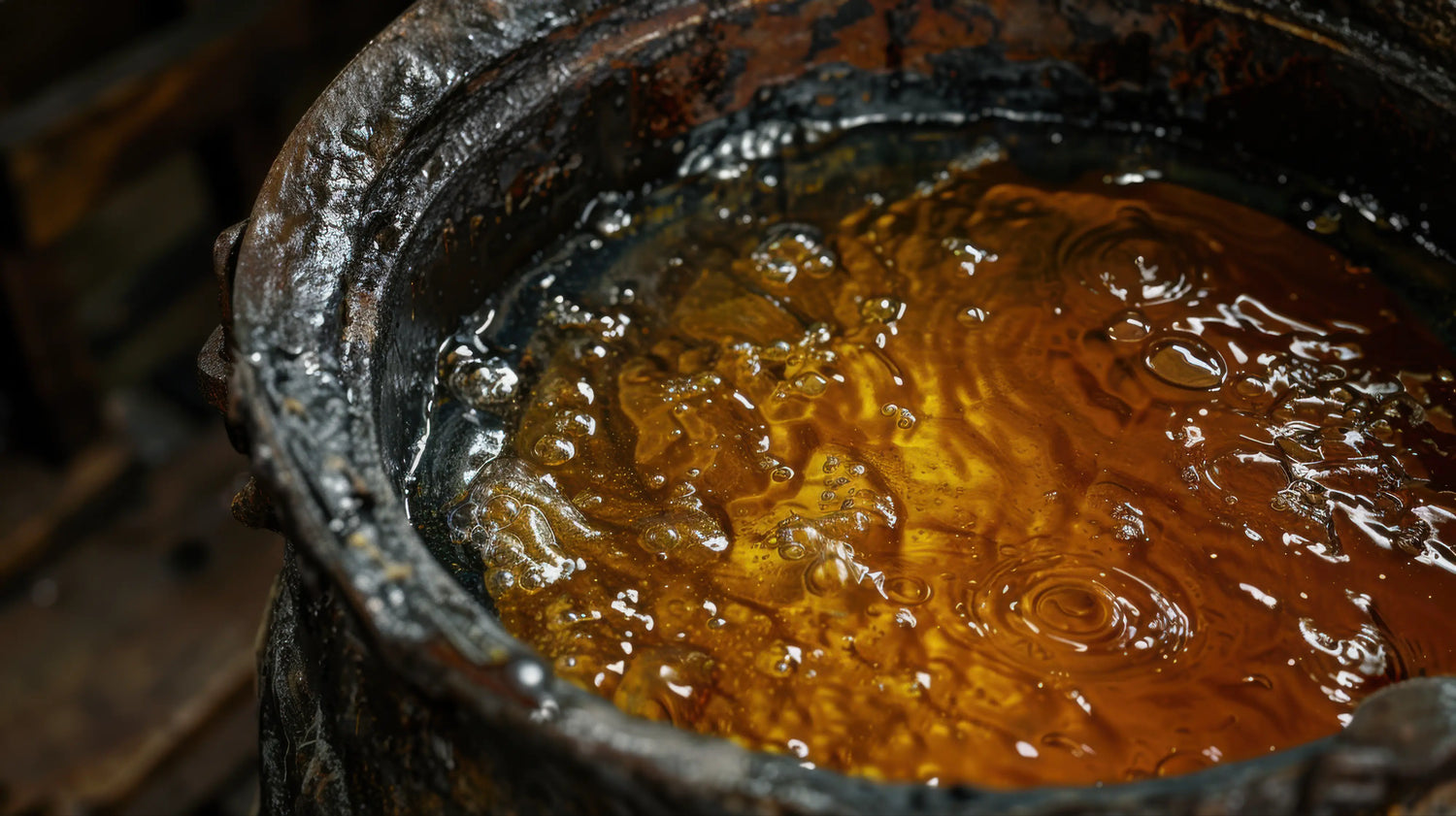
Ingredients: 40% (by weight) Natural Beeswax, 40% (by weight) Heavy Tallow (or Raw Cocoa Butter), 20% (by weight) Pure Neatsfoot Oil.
The Preparation: This formulation requires patience, as you are working with very dense fats. Set up your double-boiler and introduce the beeswax and the heavy tallow (or cocoa butter) at the same time. Because these ingredients have high, stubborn melting points, they will take some time to yield. Keep the heat low and steady; rushing the process by turning up the stove will scorch the tallow and ruin the scent of the wax. Stir the melting blocks occasionally with a wooden stick. Once you have a thick, unified liquid, remove the pot from the heat completely. Pour in the pure neatsfoot oil and whisk it through the heavy fats. Before the mixture begins to cool and cloud, pour it into a flexible silicone mould or a paper-lined tin. Because of the high wax and dense fat content, this will cool into a very hard, solid block that can be rubbed directly against the leather like a heavy bar of soap.
The Edge Burnishing Blend
What it does: A firm but malleable compound melted directly into the raw, cut edges of thick saddle leather to seal them smooth and make them entirely weather-resistant.
Ingredients: 50% (by weight) Natural Beeswax, 50% (by weight) Pure Neatsfoot Oil.
The Preparation: The beauty of this blend is in its perfect, equal ratio, which creates a wax that is just tacky enough to grip the wooden burnishing slicker without dragging. In your double-boiler, gently melt the beeswax until it is completely liquid. Remove the bowl from the heat and slowly stir in the pure neatsfoot oil. The mixture will combine effortlessly. Pour the warm liquid into a small, accessible tin. As it cools, it will not set into a rock-hard block, nor will it be a soft paste; it will cure into a firm, highly concentrated wax compound. Keep an eye out for dust while it cools. Because it is used to create a glass-smooth edge on the leather, even a single grain of workshop sand falling into the cooling tin will act like sandpaper later on, ruining hours of careful burnishing work.
The Canvas and Thread Sealant
What it does: A hard, tacky block used to heavily coat raw linen thread before hand-stitching, lubricating the pull through the leather and permanently sealing the seam against water damage and rot.
Ingredients: 70% (by weight) Natural Beeswax, 30% (by weight) Natural Pine Rosin.
The Preparation: Pine rosin is incredibly sticky and requires careful handling. Begin by wrapping your raw chunks of pine rosin in a scrap piece of heavy canvas or thick cloth, and gently crush them with a hammer until they are reduced to a fine powder. This ensures the rosin melts evenly and quickly. Set up an old, dedicated tin over a double-boiler—do not use your good glass bowls for this, as the rosin is almost impossible to wash off once it cures. Melt the beeswax first. Once the wax is liquid, slowly sprinkle the powdered rosin into the wax, stirring constantly. You must keep a very close eye on the pot here. Rosin is highly flammable and acts unpredictably if it gets too hot. Keep the heat incredibly low. Stir until the powder has completely dissolved into the wax, turning the liquid a deep, rich amber. Pour the hot mixture into a silicone mould and allow it to cool completely. It will set into a dark, rock-hard block that smells sharply of the pine forest.
The Workshop Apron Dressing
What it does: A slightly leaner, easily spreadable mixture designed to keep large panels of hide, like our heavy leather work aprons, supple without making them overly sticky to the touch.
Ingredients: 60% (by weight) Pure Neatsfoot Oil, 40% (by weight) Natural Beeswax.
The Preparation: Because you are crafting a dressing designed to cover a very large surface area, the oil content is significantly higher to ensure an easy, sweeping application. Melt your beeswax slowly over the double-boiler until it yields. Remove the vessel from the heat. Because you are adding a large volume of room-temperature neatsfoot oil to the hot wax, the sudden temperature drop may cause the wax to momentarily seize and clump up. Do not panic if this happens. Simply return the bowl to the gentle heat of the simmering water for just a moment, stirring constantly until the mixture runs smooth and unified again. Pour the golden liquid into a wide, shallow tin so that you can easily dip a large cloth or horsehair brush into it once it cools into a soft, yielding dressing.
The Antique Tool Wood Polish
What it does: A soft, nourishing paste that brings the dry, cracked grain of old wooden handles on awls, hammers, and edge bevellers back to vibrant life while providing a firm grip for the craftsman.
Ingredients: 60% (by weight) Raw Linseed Oil, 40% (by weight) Natural Beeswax.
The Preparation: Working with raw linseed oil requires a very specific approach, as it is a natural drying oil that cures when exposed to air and heat. Set up your double-boiler and melt the beeswax completely. Once the wax is liquid, turn the stove off. You must introduce the raw linseed oil away from active, high heat, otherwise, you risk prematurely triggering the oil's curing process, which will turn your polish into a thick, unusable glue. Slowly pour the linseed oil into the warm wax, whisking gently to combine the two elements. The mixture will take on a deep, rich, golden-brown hue. Pour it into a heavy glass jar and seal the lid tightly as soon as it has cooled. Because linseed oil oxidises, leaving the jar open on the bench for days on end will cause a hard, cured skin to form over the top of your polish. Keep it sealed tightly, and it will serve your tools for years.
The Final Alchemy
To carry a Caracoda Equestrian piece is to accept a quiet, rewarding stewardship. The heavy labour performed at our bench—the currying of the tallow, the melting of the wax, and the binding of the linen thread—is merely the beginning of the leather’s story. As you take these pieces out into the world, across the ancient shires and the biting winds of the coast, the hide will continue to actively record your own history. It will darken with the sun, soften with the journey, and earn a rich, complex patina that absolutely no modern factory can replicate. By returning to these traditional, uncompromising provisions of the natural world, you are participating in an unbroken lineage of English saddlery. You are not simply maintaining a bag; you are ensuring that the resilience of the oak, the memory of the river, and the enduring heritage of the Seven Kingdoms ride on for generations.